
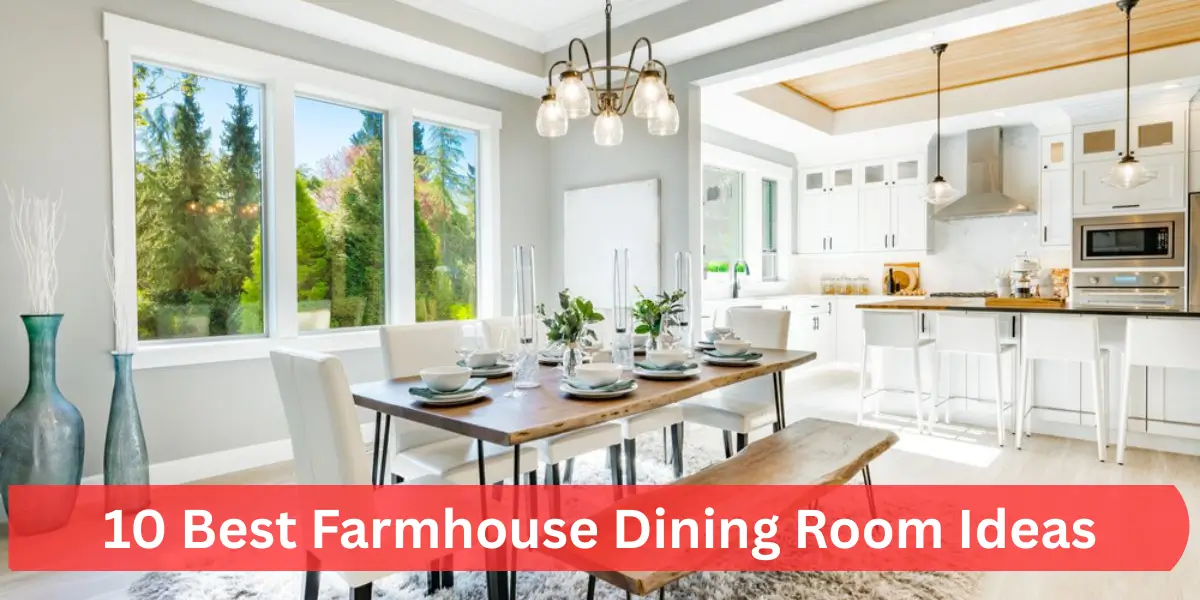
Farmhouse dining room ideas focus on creating a space that feels welcoming, comfortable, and naturally stylish. From my experience, the charm of a farmhouse dining room comes from its balance of rustic character and everyday functionality.
It’s not about overdecorating but about choosing elements that feel authentic and lived-in. Natural materials, soft colors, and thoughtful details work together to create an environment where people enjoy gathering and staying longer at the table.
In this article, I’ll share farmhouse dining room ideas that I’ve seen work beautifully in real homes, helping you design a space that feels timeless, relaxed, and genuinely inviting.
1. Rustic Wooden Dining Table as the Heart of the Room
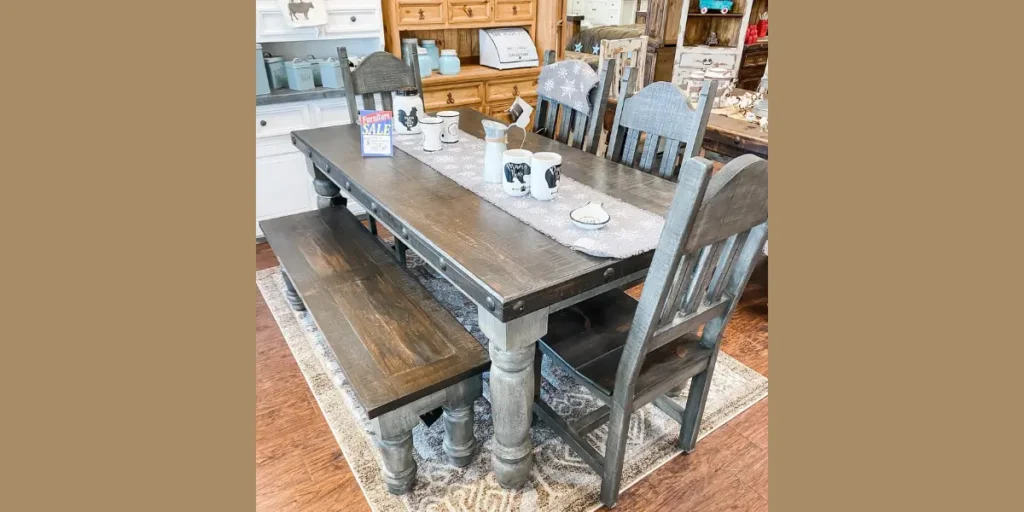
I always begin farmhouse dining rooms with a solid wooden dining table. A rustic table instantly sets the tone and gives the space authenticity. Whether it’s reclaimed wood or a distressed finish, visible grain and texture add character that feels genuine and timeless.
I prefer tables with simple, sturdy legs rather than overly decorative designs. This keeps the look grounded and practical for everyday use. A large surface also supports family-style dining, which suits farmhouse living perfectly.
When paired with simple chairs and warm lighting, a rustic table anchors the entire room. It creates a welcoming focal point that naturally draws people together.
2. White and Neutral Color Palette for an Airy Feel
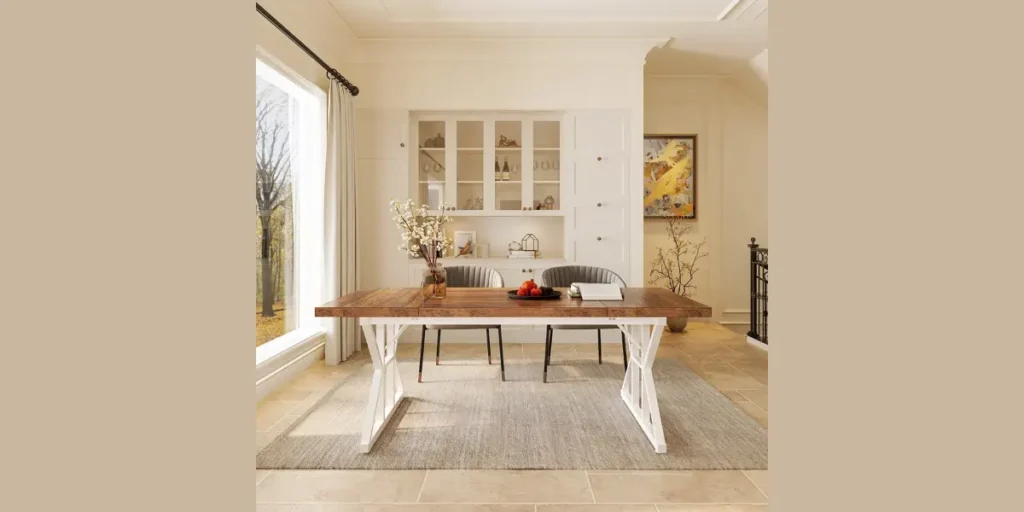
I rely on white and neutral tones to keep farmhouse dining rooms feeling light and open. Soft whites, creams, and warm beiges create a calm backdrop that highlights natural materials beautifully.
These colors work especially well with wood furniture, allowing textures to stand out without visual clutter. I often layer neutrals rather than using pure white to avoid a flat or cold look.
A neutral palette also makes the space flexible. It allows seasonal décor or greenery to shine while keeping the dining room timeless and easy to update over time.
3. Farmhouse Chandelier or Rustic Pendant Lighting
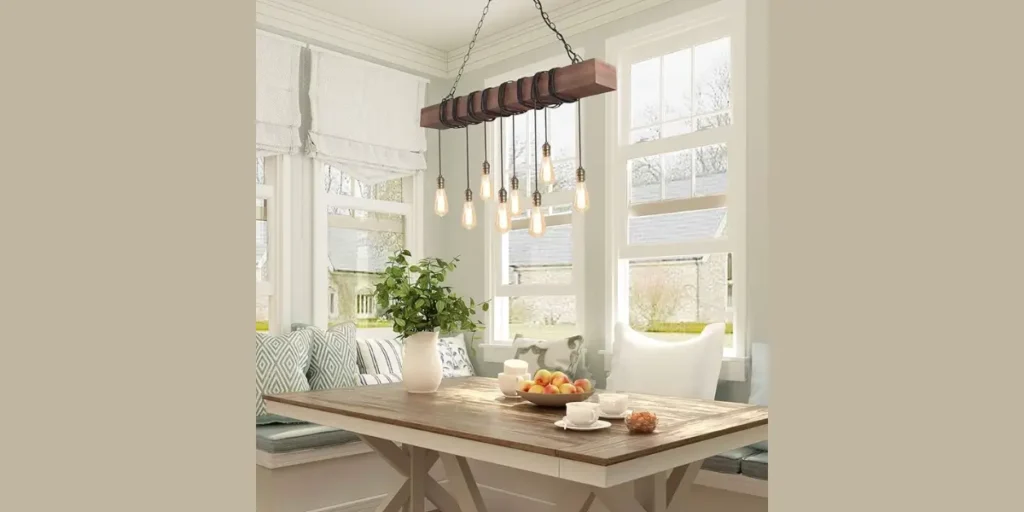
Lighting plays a major role in farmhouse dining rooms, and I usually choose a rustic chandelier or metal pendant over the table. This instantly defines the dining area and adds charm.

I look for fixtures with simple shapes and warm finishes, such as black metal or aged bronze. Exposed bulbs or candle-style lights enhance the farmhouse feel without appearing overly vintage.
Proper height is essential. When hung correctly, the lighting creates intimacy at the table and makes meals feel cozy and inviting rather than overly formal.
4. Mix of Wooden Chairs and Bench Seating
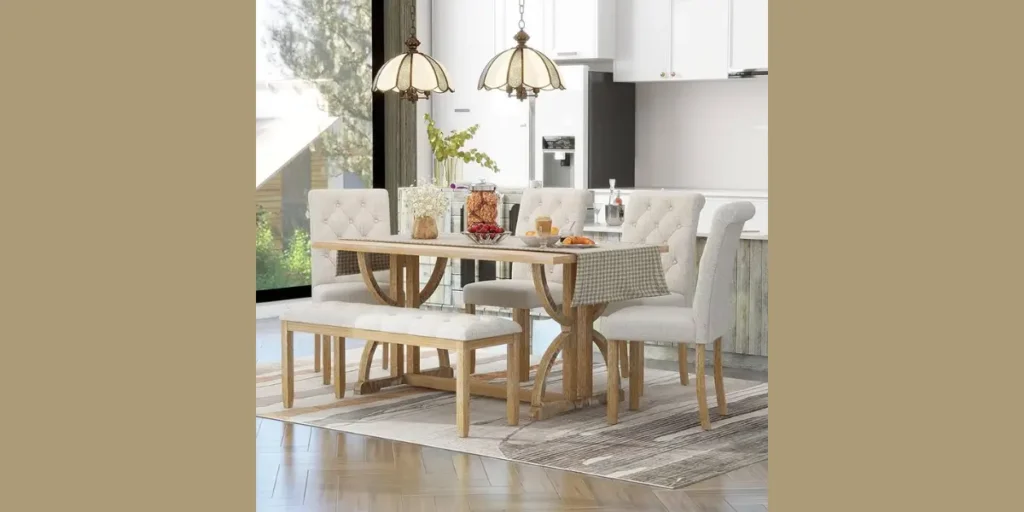
I often mix wooden chairs with bench seating to create a relaxed farmhouse layout. Benches add a casual, family-friendly feel and make seating more flexible.
This setup works especially well for larger tables or homes that host frequent gatherings. A bench allows more people to sit comfortably without crowding the space.
To keep the look balanced, I pair benches with simple chairs that match the table’s finish. This combination feels practical, welcoming, and perfectly suited to farmhouse living.
5. Shiplap or Paneled Dining Room Walls
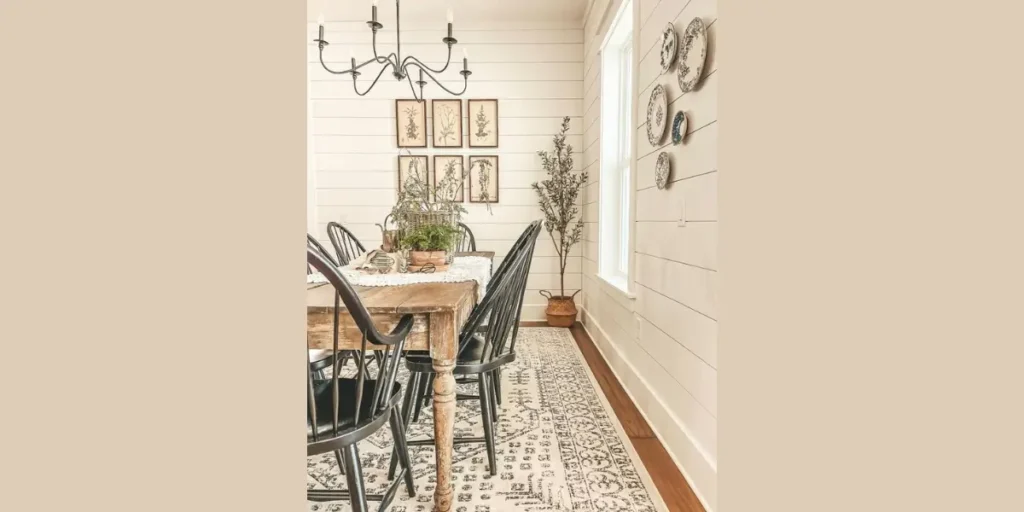
Shiplap walls are one of the most recognizable farmhouse features, and I use them to add subtle texture. White or soft-toned panels bring depth without overwhelming the space.
I often install shiplap on one wall or as an accent to keep the design light. Vertical or horizontal paneling both work, depending on ceiling height and room proportions.
Paneled walls give the dining room a sense of structure and charm. They enhance the farmhouse aesthetic while keeping the space clean and visually calm.
6. Vintage or Antique Decorative Accents
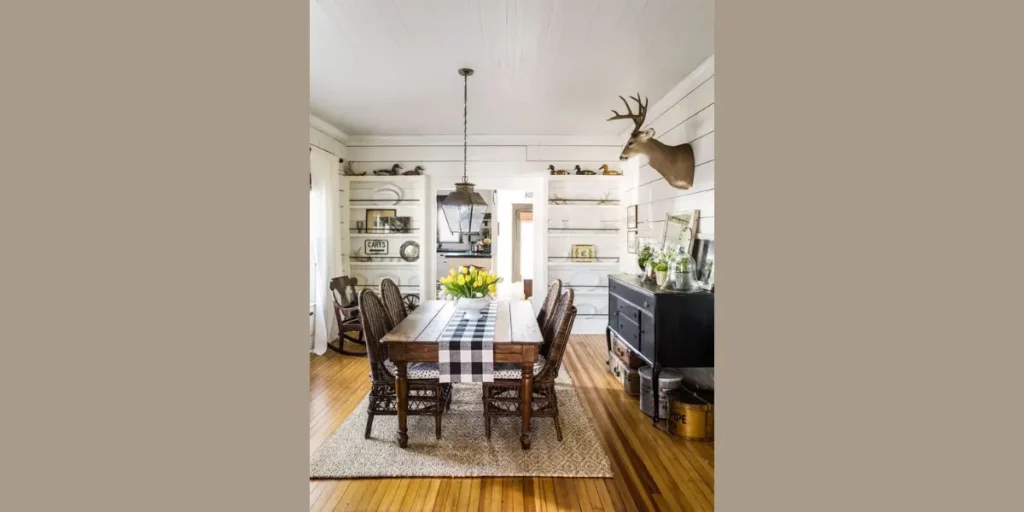
I use vintage accents to give farmhouse dining rooms personality and history. Items like antique mirrors, old frames, or weathered décor pieces add warmth and authenticity.
I avoid overcrowding and choose just a few meaningful pieces. Too many vintage items can make the room feel staged rather than lived-in.
When mixed with modern elements, antiques feel fresh instead of dated. This balance keeps the dining room personal, layered, and visually interesting without losing its farmhouse identity.
7. Open Shelving with Farmhouse Styling
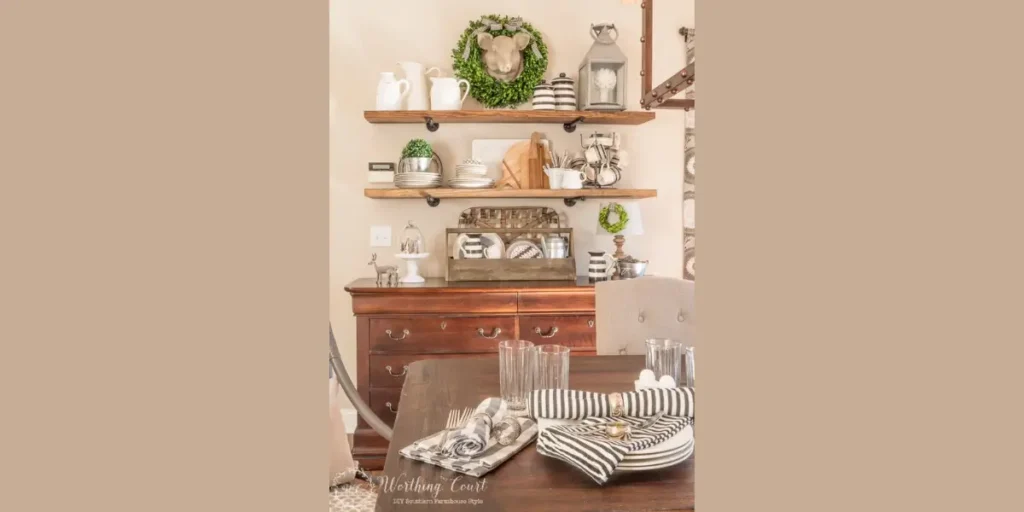
Open shelving works beautifully in farmhouse dining rooms when styled with intention. I often display ceramic dishes, wooden bowls, or simple glassware for a functional yet decorative look.
I keep the arrangement minimal and consistent in color. This prevents shelves from feeling cluttered and helps maintain a clean farmhouse aesthetic.
Open shelves add charm and accessibility. They make the dining room feel relaxed and practical, reinforcing the idea of everyday use rather than formal display.
8. Natural Textiles and Soft Fabrics
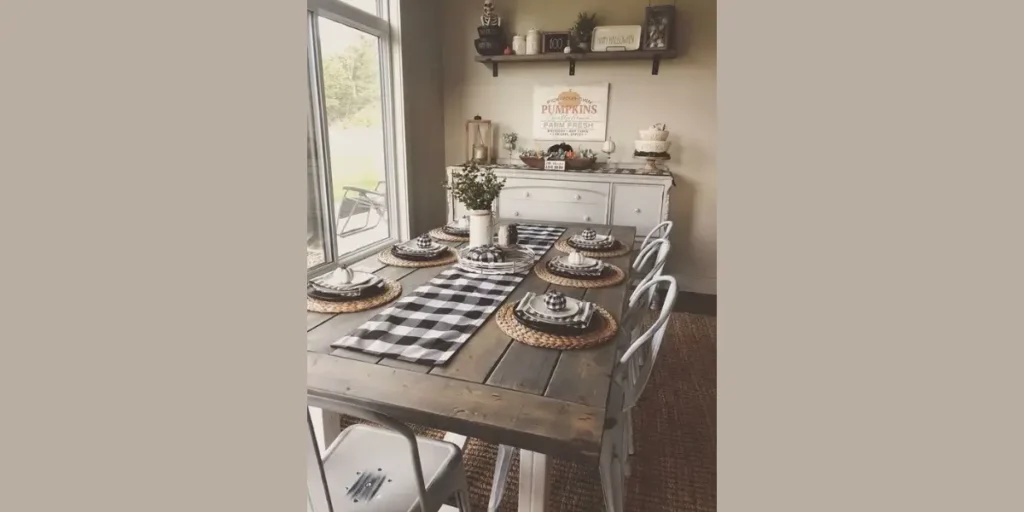
I always include natural textiles to soften farmhouse dining rooms. Linen runners, cotton cushions, or woven seat pads add comfort and warmth.
These fabrics introduce texture without adding heaviness. Neutral or earthy tones keep the look cohesive and relaxed.
Textiles also improve functionality. They make seating more comfortable and help absorb sound, creating a more pleasant dining experience during meals and gatherings.
9. Farmhouse Accent Wall for Added Character
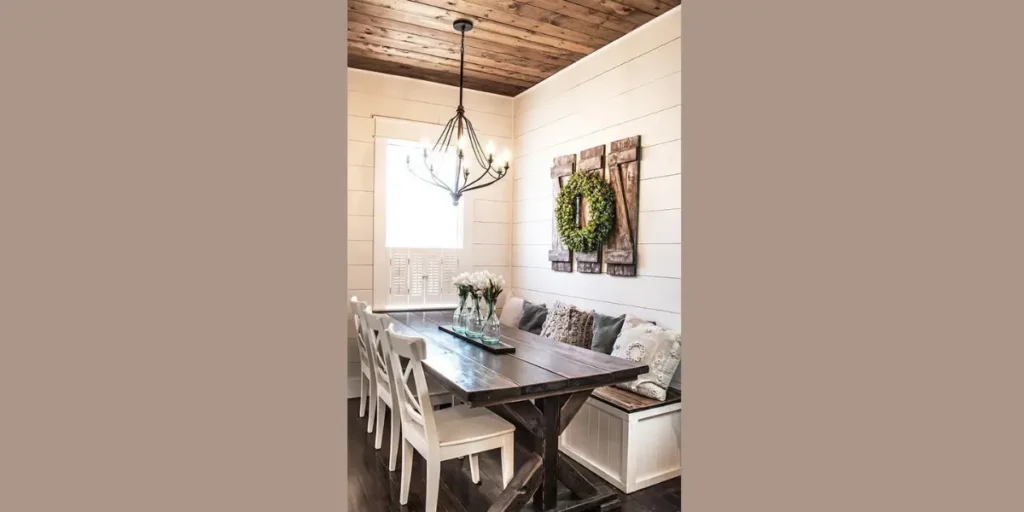
An accent wall helps give a farmhouse dining room depth and focus. I often use wood, shiplap, or subtle paint tones behind the dining table.

This approach anchors the space visually and adds interest without overwhelming the room. Texture usually works better than bold color in farmhouse interiors.
When done thoughtfully, an accent wall enhances the dining area and reinforces the rustic charm while keeping the overall design balanced and inviting.
10. Greenery and Natural Elements
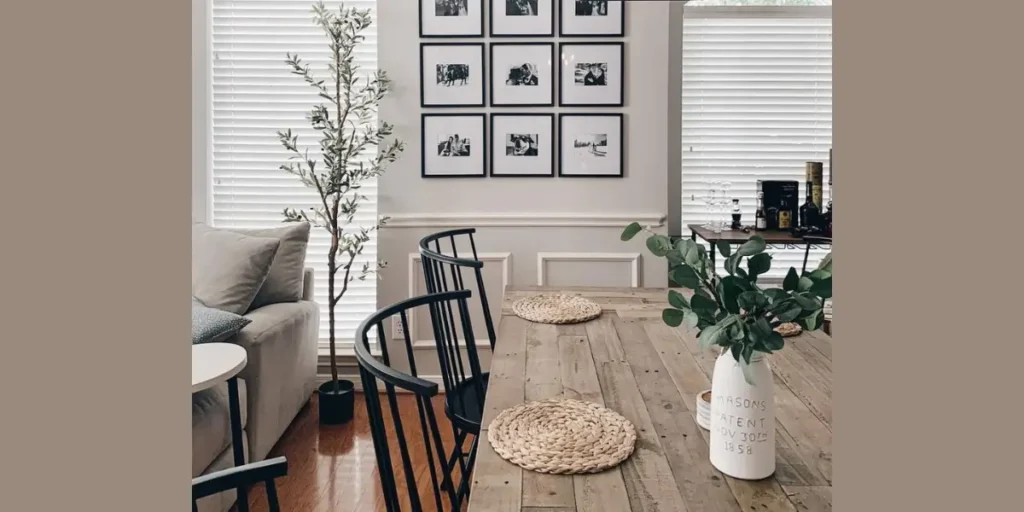
I use greenery to bring life into farmhouse dining rooms. Indoor plants, simple floral arrangements, or even dried branches add freshness and warmth.
Natural elements soften the space and connect the interior to the outdoors. This fits perfectly with the farmhouse philosophy of simplicity and nature.
Greenery doesn’t need to be excessive. A few well-placed plants can transform the dining room into a calm, welcoming space that feels alive and comfortable.
How to Create an Authentic Farmhouse Dining Atmosphere
When I design a farmhouse dining room, I focus on authenticity rather than decoration. Natural materials, practical furniture, and comfortable layouts matter more than themed décor. The space should feel lived-in and welcoming, not styled for display.
I also pay close attention to balance. Too many rustic elements can feel heavy, while too many modern pieces can dilute the farmhouse charm. Mixing old textures with clean lines keeps the atmosphere warm and approachable.
Most importantly, I design around how the dining room is actually used. A true farmhouse dining space supports everyday meals, long conversations, and family gatherings without feeling formal or restrictive.
FAQs
A farmhouse dining room focuses on warmth, simplicity, and natural materials. From my experience, elements like wooden tables, neutral colors, and relaxed seating create a welcoming and timeless atmosphere.
Yes, farmhouse style blends beautifully with modern homes when balanced correctly. I often combine rustic textures with clean lines to keep the space fresh and current rather than overly traditional.
Soft whites, warm neutrals, and earthy tones work best. These colors highlight natural textures and keep the dining room bright, calm, and inviting throughout the day.
I avoid overly themed décor and focus on quality materials and simple forms. Mixing vintage elements with modern lighting or furniture helps the space feel timeless rather than dated.
Related Post
- 9 Famous Dining Room Accent Wall Ideas
- 10 Best Dining Room Interior Ideas
- Top 12 Dining Room Chair Ideas
- Top 11 Dining Room Lighting Over Table Ideas
- Top 10 Dining Room Wall Art Ideas
Conclusion
A farmhouse dining room succeeds when it feels warm, honest, and effortless. From my experience, the most inviting spaces are built around natural materials, comfortable seating, and a layout that encourages people to slow down and connect.
Farmhouse style isn’t about perfection, it’s about creating a room that feels lived-in and welcoming every day.
When rustic elements are balanced with thoughtful design choices, the dining room becomes a place where meals turn into moments and gatherings feel genuine and relaxed.