
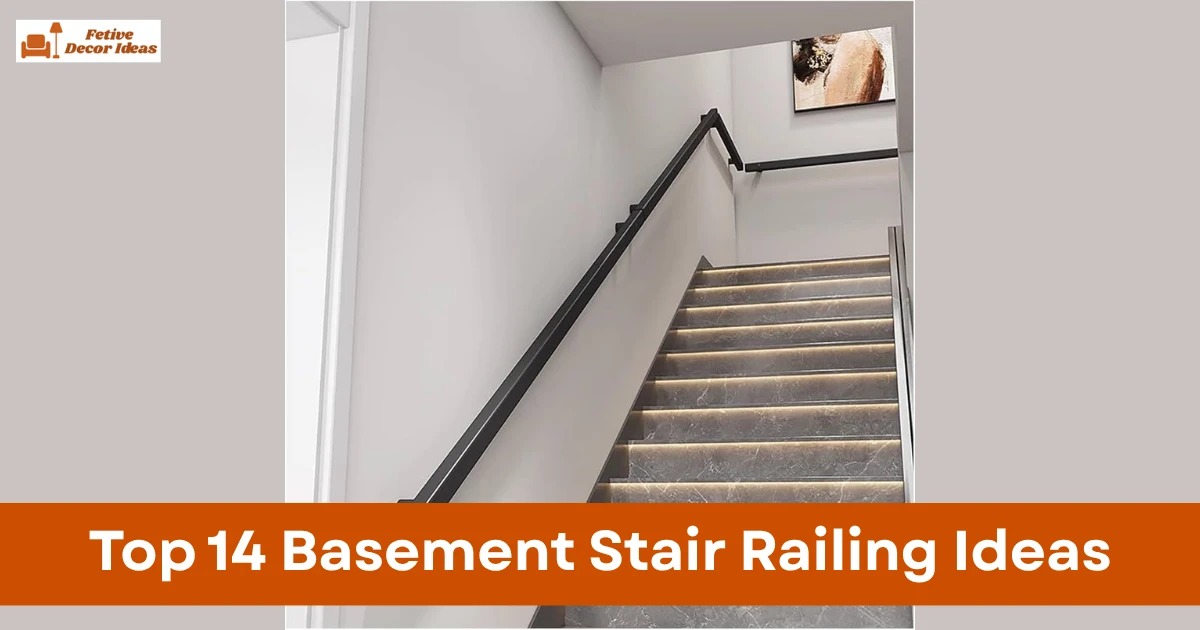
Basement staircases often serve as both functional and aesthetic components of a home. Finding the right stair railing design can enhance the space’s overall look while ensuring safety.
Whether you’re aiming for something modern, rustic, or classic, here are 14 basement stair railing ideas that combine style, durability, and safety.
Why Basement Stair Railings Are the Perfect Blend of Safety and Design
When it comes to basement stair railings, choosing the right design is essential for both aesthetics and safety. A well-chosen railing not only provides security but also enhances the overall look of your basement space.
Basement stair railings come in a variety of materials, from glass and metal to wood and cable, allowing you to find the perfect style that complements your home’s interior while ensuring durability and support.
Whether you’re looking for sleek glass railings to open up your space or industrial steel for a bold statement, basement stair railings can fit seamlessly into any design theme, from modern and minimalist to rustic or traditional.
The beauty of basement stair railings lies in their versatility. You can mix materials, customize designs, and create a personalized style that maintains both safety and elegance in your basement.
1. Glass Railings for a Sleek, Modern Look
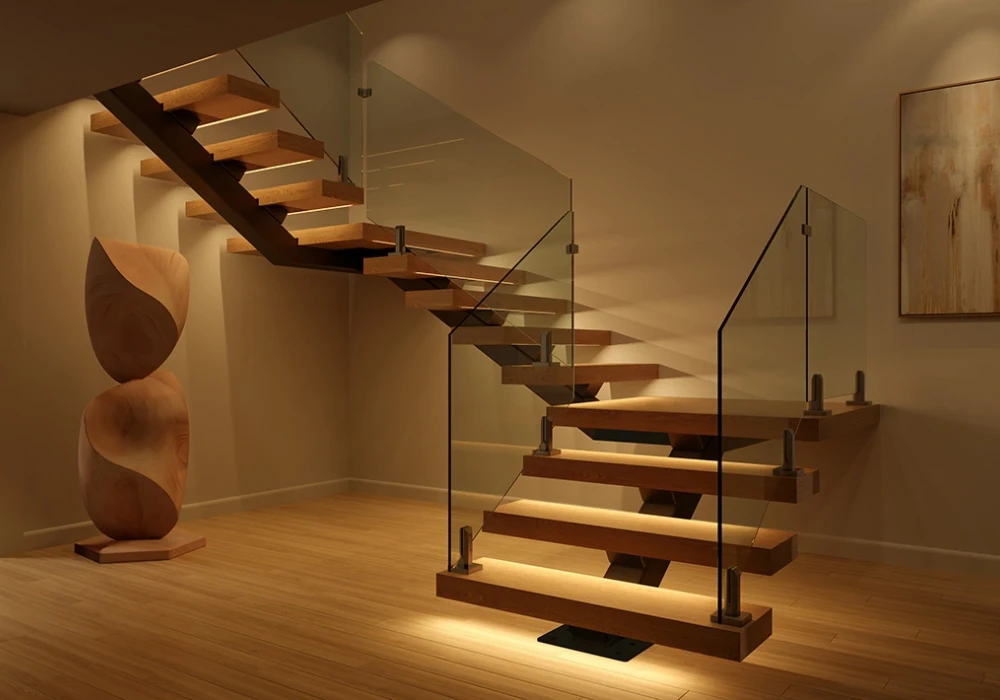
Glass railings create a seamless and sophisticated design for basement stairs. The transparent material allows light to pass through, making the space appear more open and airy.
With no visible supports, glass railings can give your basement an elegant and contemporary feel. You can opt for a frameless design to maintain a minimalistic look that blends seamlessly into your space.
Glass railings are also low-maintenance. Cleaning them requires only occasional wiping, and tempered glass ensures durability and safety for any home.
Pairing glass with a sleek metal or wooden handrail can add texture and warmth, balancing the transparency of the glass with a more natural, earthy element.
2. Industrial Steel Railings for a Bold Statement
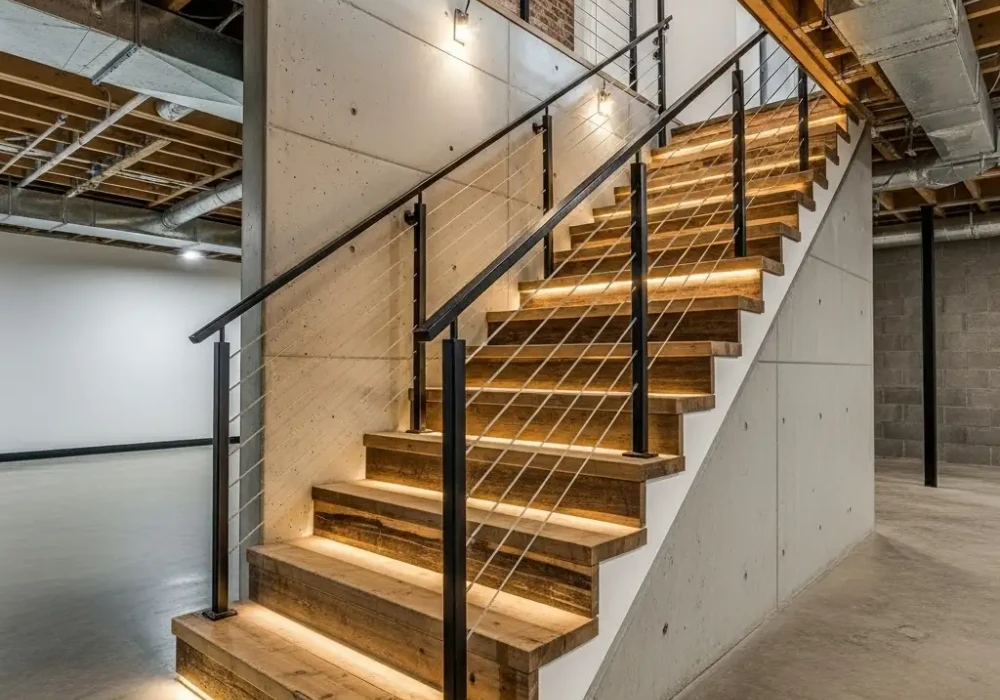
Industrial steel railings are perfect for basement staircases with a modern or industrial aesthetic. Steel offers a rugged, strong design that adds a contemporary feel to your space.
The raw, metallic finish of steel complements modern basements with exposed beams or concrete floors. It creates a striking contrast against the soft textures often found in home basements, such as rugs or upholstered furniture.
Steel railings are incredibly durable and provide excellent support. They’re a great option for basements that are frequently used by family or guests.
To soften the industrial vibe, combine steel posts with a wooden handrail for a more balanced look. This pairing brings warmth to the otherwise cold industrial style.
3. Wood and Metal Fusion for a Balanced Look
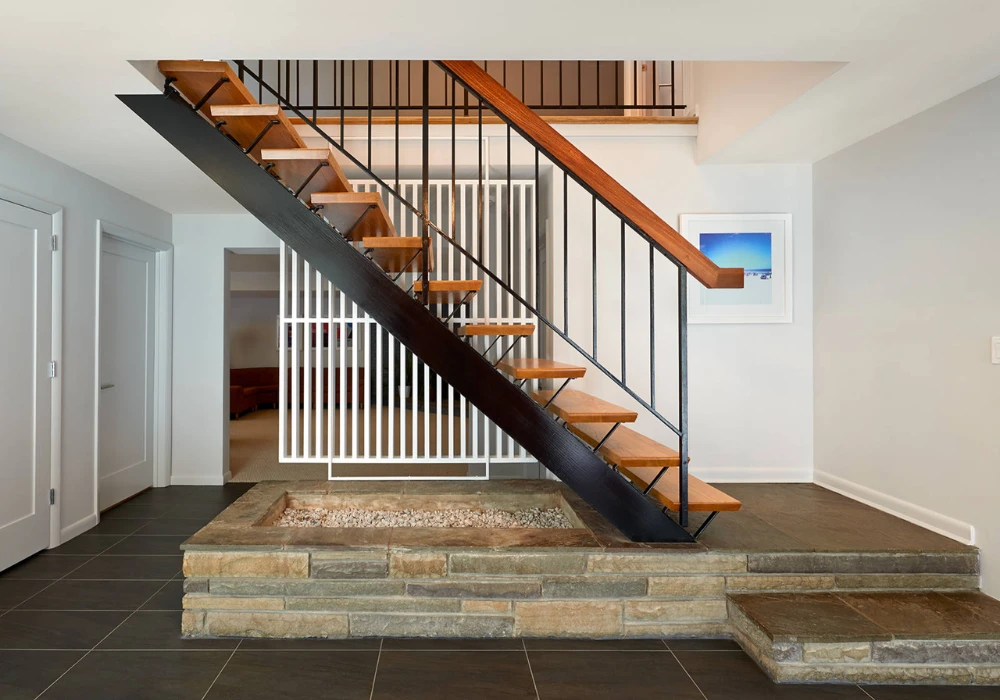
Combining wood and metal creates an ideal fusion of warmth and strength, perfect for a basement staircase. The natural grain of wood blends beautifully with sleek metal posts, offering both durability and visual appeal.
This style allows you to customize the proportions of wood and metal to fit your home’s existing decor. For a modern look, opt for minimal metal posts with a sturdy wooden handrail.
The beauty of wood and metal is in their versatility. This combination can work well in rustic basements, as well as in more contemporary, industrial spaces.
With the variety of wood finishes and metal types available, you can choose from options like walnut, oak, blackened steel, or brushed nickel to perfectly complement your basement style.
4. Cable Railings for a Minimalist Design
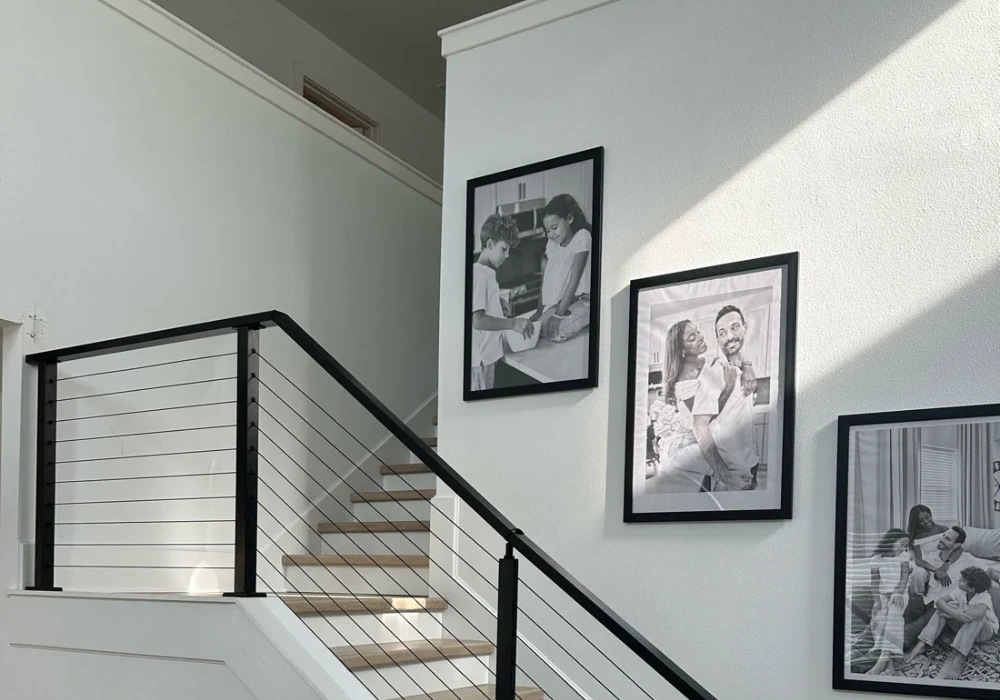
Cable railings are an excellent choice for basements with an open, airy feel. The use of stainless steel cables creates a clean, unobstructed view while maintaining the safety needed for basement stairs.
These railings are perfect for minimalist spaces, as they don’t overwhelm the design with heavy, bulky posts or railings. The thin metal wires allow light to filter through, making your basement feel larger and more expansive.
Cable railings are also durable and low-maintenance. They provide sturdy support while offering a modern, sleek look that works well in both industrial and contemporary basements.
For added safety and design appeal, pair the cables with a wooden or metal handrail that complements the rest of your basement decor.
5. Spindle Railings for a Classic Touch
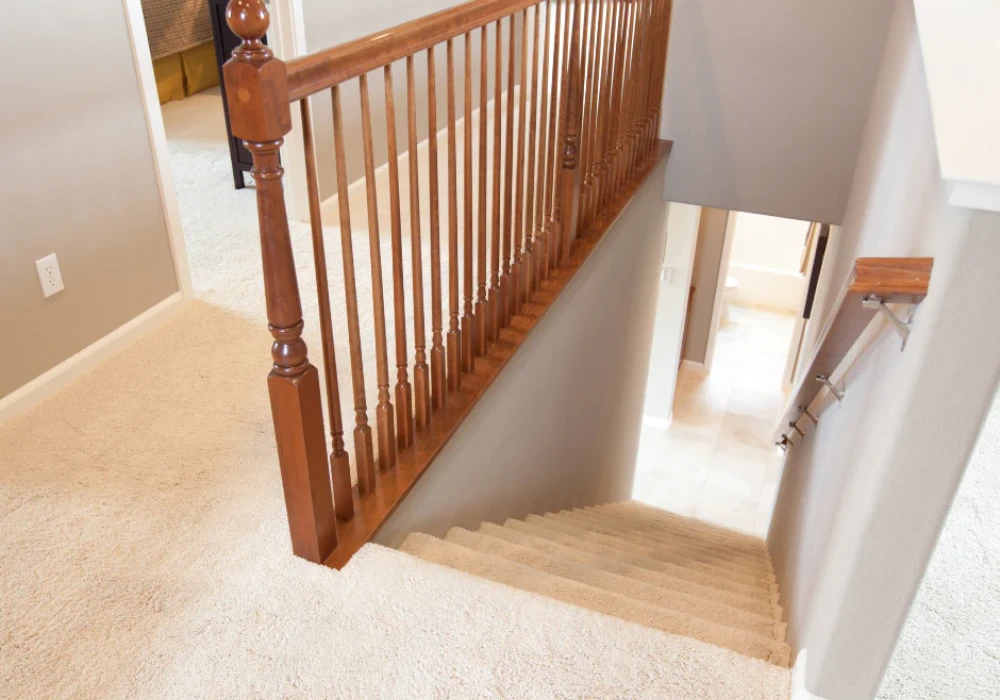
Spindle railings are a timeless option for basement staircases. This classic design involves evenly spaced vertical spindles that add a sense of structure and elegance to your stairs.
Spindles can be made from wood or metal, depending on your desired look. For a more modern feel, opt for metal spindles with clean lines, or choose wood spindles for a warmer, more traditional vibe.
This style is particularly well-suited for basements with more traditional or vintage decor, adding a classic charm that never goes out of style.
You can mix and match the spindles’ design, choosing between simple vertical spindles or decorative patterns, depending on the aesthetic you’re aiming for.
6. Floating Handrails for a Contemporary, Minimalist Look
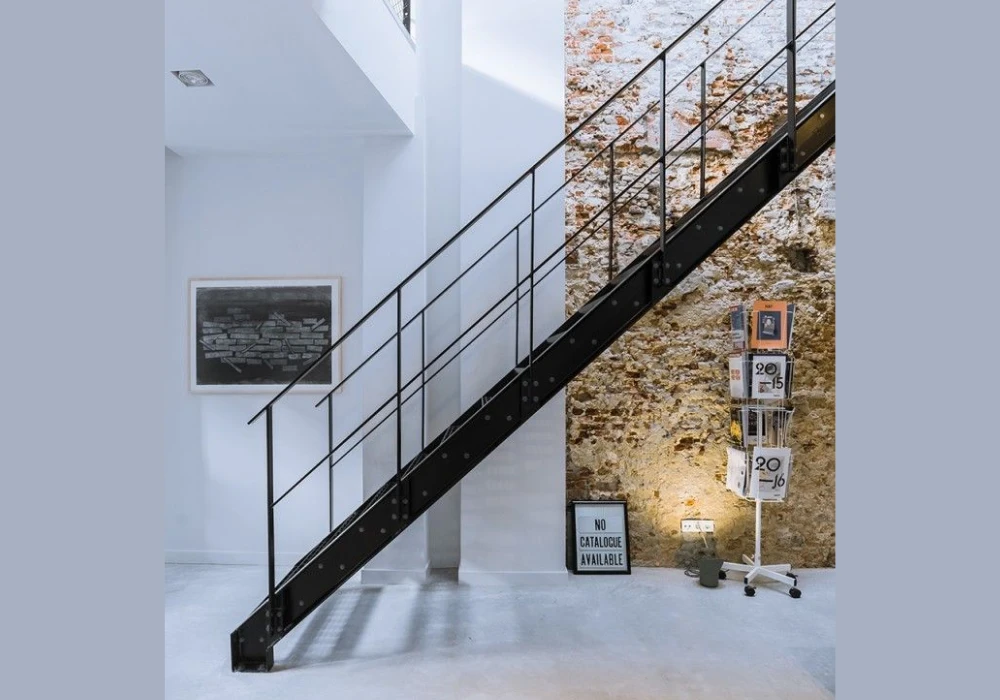
Floating handrails create a modern, minimalist design that works particularly well in basements with sleek, contemporary decor. These handrails appear to “float” along the wall without visible support, creating an airy, light feel.
This design enhances the feeling of openness in a basement, making it appear less crowded and more spacious. Floating handrails can be mounted to the wall, which frees up visual space along the staircase.
For added stability, floating handrails are often made of durable materials such as metal or solid wood. Combining the floating design with a clear glass panel can further enhance the minimalist style.
This is an ideal option for basements that feature modern furniture, neutral color schemes, and an open floor plan.
7. Wire Mesh Railings for an Industrial Edge
Wire mesh railings offer an industrial-inspired look that is perfect for basements with exposed brick, concrete, or metal accents. The mesh pattern creates a strong visual appeal while allowing light to pass through.
These railings are a practical and stylish solution for basements with a rustic or factory-chic style. The metal mesh can be painted in various finishes, from matte black to galvanized steel, to complement your existing decor.
Wire mesh railings are extremely durable and offer a high level of safety. They are also relatively low maintenance, making them a great choice for high-traffic areas.
Pair the wire mesh with a sturdy metal or wood handrail to complete the industrial aesthetic while maintaining a functional, safe design.
8. Wrought Iron Railings for Timeless Elegance
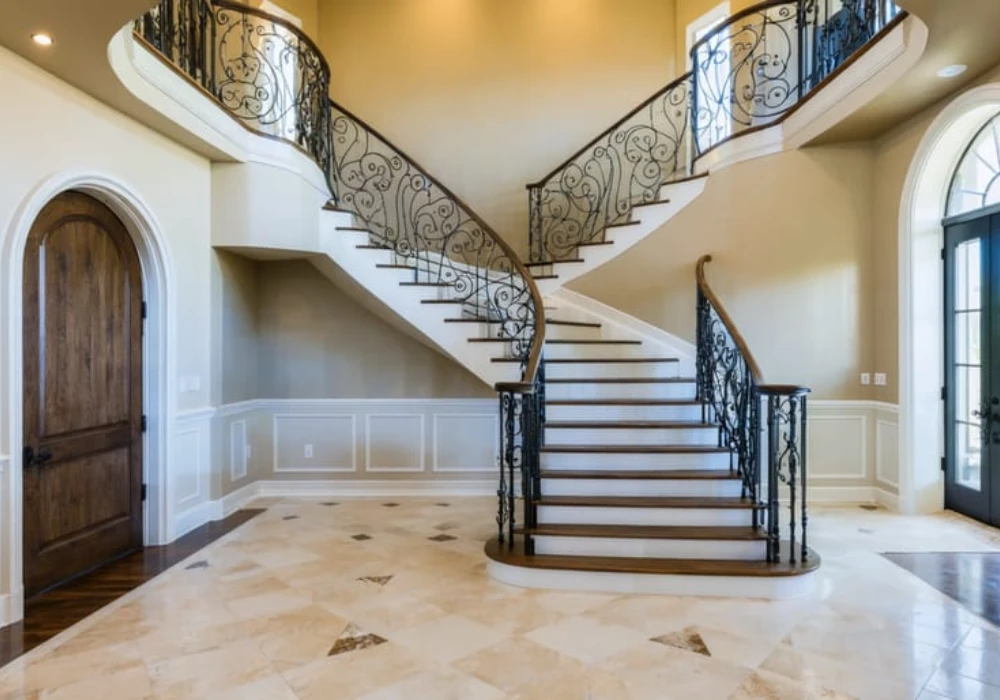
Wrought iron railings have been a staple of home design for centuries, offering a classic, elegant look that works perfectly in basements with a more traditional or vintage style.
The intricate patterns of wrought iron railings can be customized to match the aesthetics of your basement, from ornate, decorative designs to simpler, more modern interpretations. The dark finish of wrought iron also adds depth to your basement decor.
Wrought iron is a durable and sturdy material, making it ideal for basements where safety is a priority. It also requires minimal maintenance, ensuring longevity.
Consider pairing wrought iron railings with a wooden handrail to create a blend of old-world charm and contemporary style, giving your basement a timeless, sophisticated feel.
9. Open Tread Staircases with Glass Railings
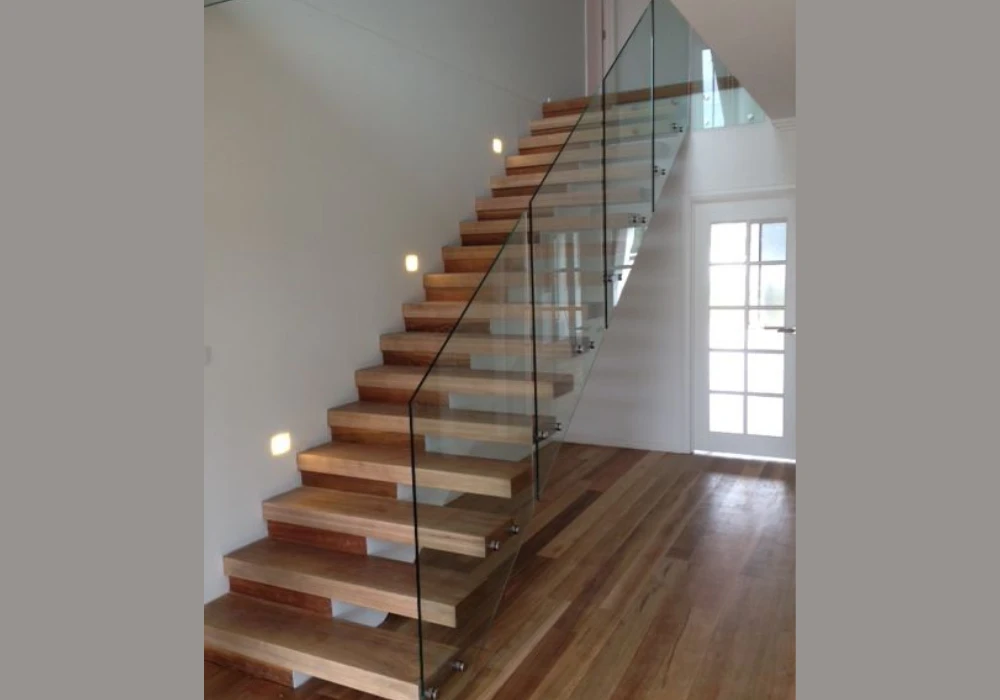
Open tread staircases are an excellent choice for basements with limited space or lower ceilings. This design allows for more light and visibility, making the space feel more open and less cramped.
Pairing an open tread staircase with glass railings creates a modern, minimalist look while ensuring safety. The glass panels give the illusion of more space and don’t obstruct views, which is perfect for smaller or more compact basements.
This combination is ideal for basements that aim to maintain a sleek, contemporary design. The clean lines of glass and the openness of the open treads work together to create an airy atmosphere.
Glass railings paired with slim metal or wooden supports offer a minimalist approach that is both functional and stylish, complementing modern basement decor.
10. Metal Rod Railings for a Unique Twist
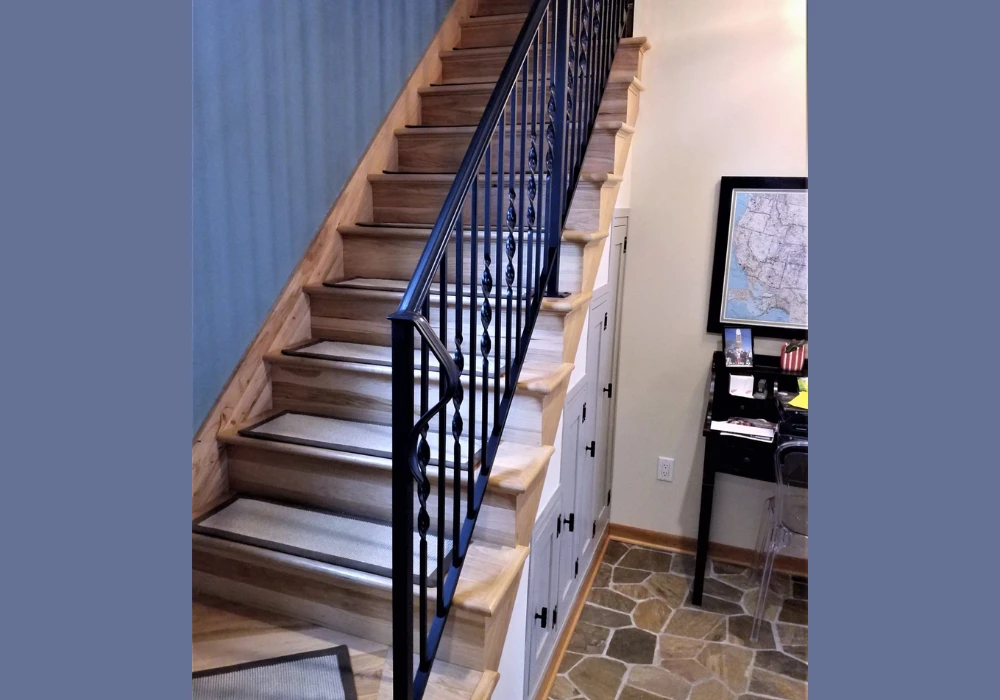
Metal rod railings provide a unique twist on traditional spindle designs. The slim rods create a contemporary, industrial look that adds visual interest without overwhelming the space.
These railings are perfect for basements with an industrial, urban vibe. The rods can be arranged vertically or horizontally, offering various design possibilities that fit the aesthetic of your space.
Metal rod railings are highly durable and require minimal upkeep. Their sleek design helps maintain an open, airy feel in the basement, ensuring the space doesn’t feel closed off.
For a softer, more balanced look, consider pairing the metal rods with a wood or metal handrail that complements the rods and enhances the overall design.
11. Curved Railings for Soft Elegance
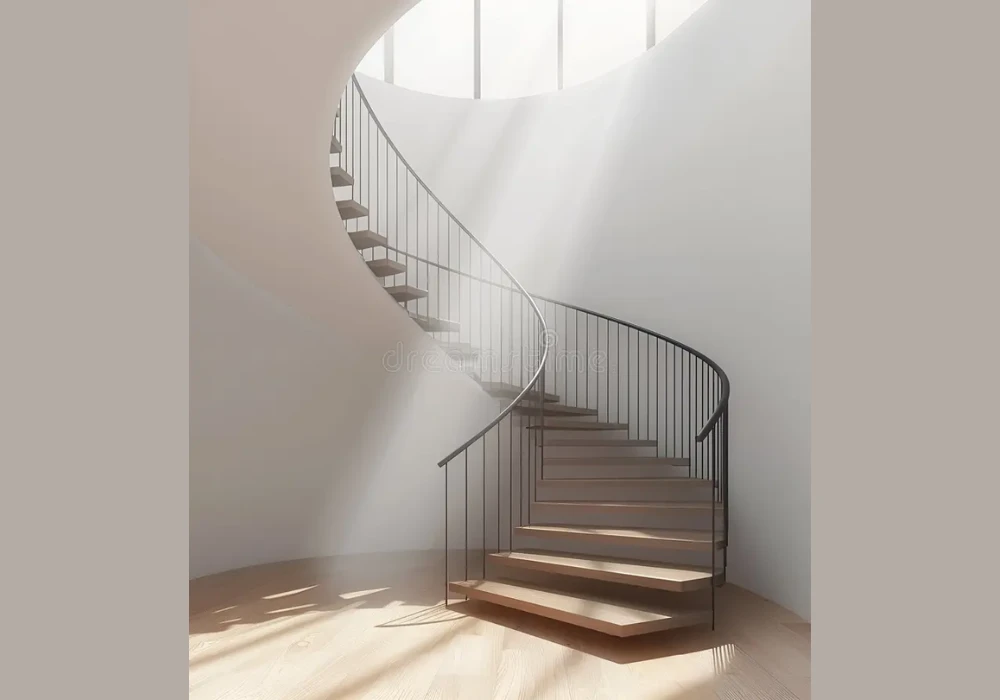
Curved railings add a soft, elegant touch to basement stairs, offering a flowing design that contrasts with the typically angular lines of the space. These railings work well in basements where a gentle, graceful aesthetic is desired.
A curved railing can be made from metal or wood, and it is especially effective in basements with wide staircases or circular stairwells. The smooth curve offers an inviting and sophisticated look.
Curved railings are perfect for basements with vintage, French-inspired, or traditional decor, as they soften the space and add a touch of elegance.
This design adds a unique dynamic to your basement stairs, creating a smooth visual flow that enhances the overall atmosphere.
12. Floating Tread Staircases with Metal Railings
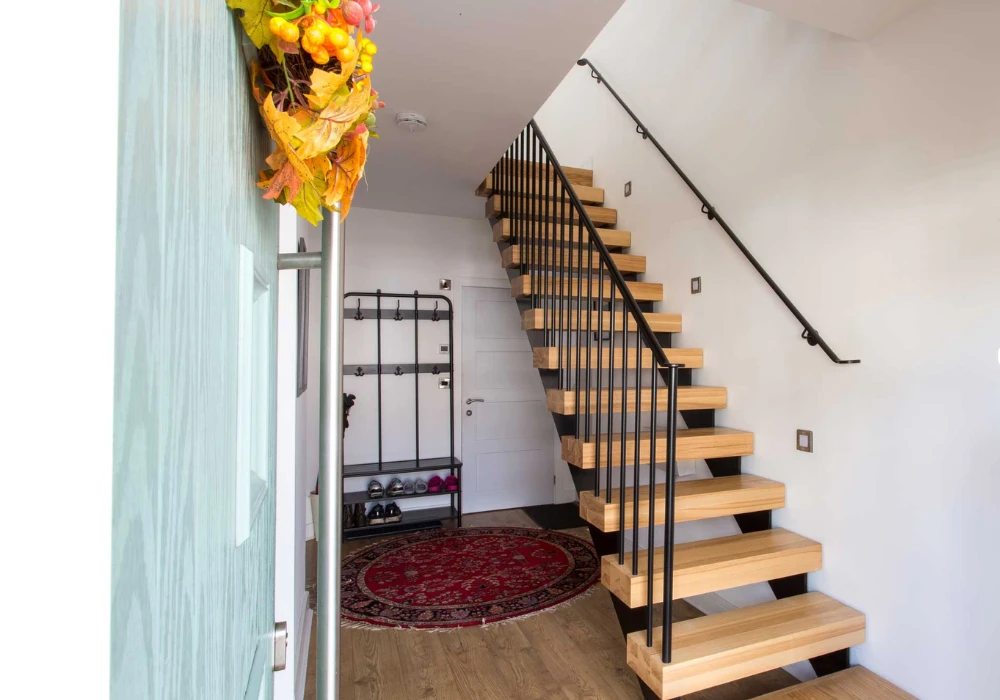
Floating tread staircases offer a modern, contemporary look by making each stair appear to “float” without visible supports. This design gives the basement a clean and sophisticated appearance.
Pairing floating treads with slim metal railings enhances the minimalist aesthetic, maintaining an open, airy feel in your basement. Metal railings provide the structural support needed while keeping the design sleek and unobtrusive.
This style works best in basements with an open, spacious layout, where the staircase can be a focal point without overwhelming the room.
With metal railings and floating steps, your basement stair railing will combine the best of modern design and functionality.
13. Ladder-Style Railings for a Simple, Sleek Design
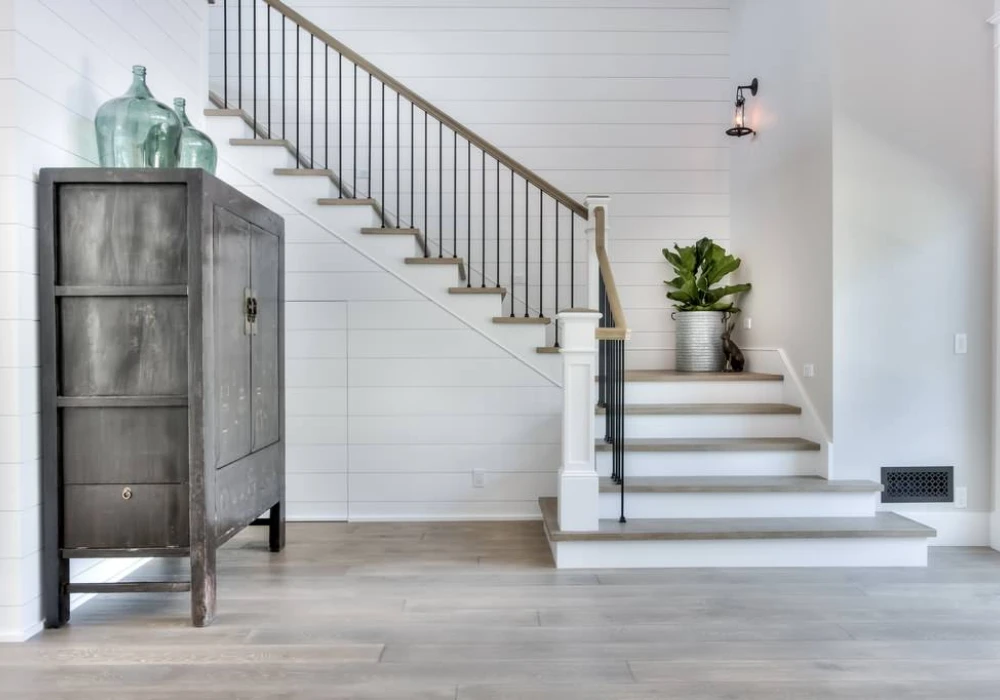
Ladder-style railings provide a clean, simple design for basement stairs. This style features vertical metal rods arranged in a pattern that mimics the look of a ladder, offering both safety and minimal visual obstruction.
Ladder railings are perfect for contemporary or industrial-inspired basements, as their sleek design complements other modern decor elements like exposed brick, concrete, and metal fixtures.
These railings maintain an open, airy feel while ensuring stability and safety. They’re an excellent choice for those who want to keep the space visually open without sacrificing security.
The slim vertical bars of a ladder-style railing allow light to pass through, helping to maintain the basement’s open feel.
14. Rustic Wood Railings for a Warm, Inviting Feel
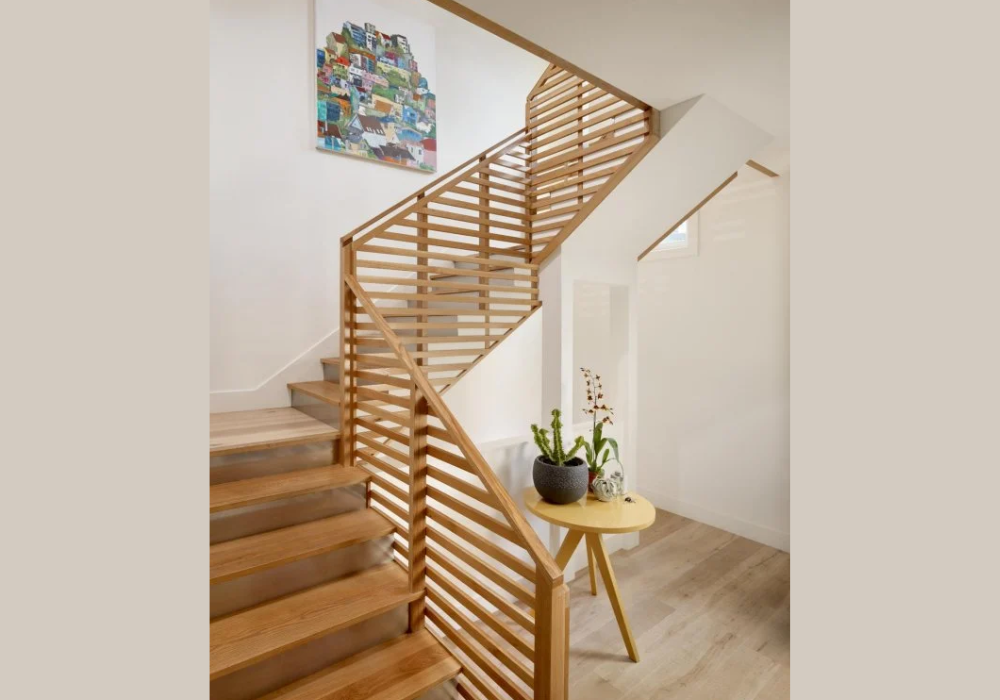
Rustic wood railings add warmth and texture to a basement, perfect for creating a cozy, inviting space. The natural wood tones contrast beautifully with the often cooler materials found in basement decor, like stone or concrete.
Wood railings can be customized with a variety of stains and finishes, allowing you to match the design to your basement’s existing aesthetic. A distressed or reclaimed wood railing adds a vintage, farmhouse charm to the space.
This style works well in basements with a rustic, country, or vintage theme. The organic texture of the wood softens the industrial feel and creates a welcoming environment.
Pairing wood railings with iron or metal supports enhances the rustic look while providing additional durability and strength.
Conclusion
Choosing the right basement stair railing is about balancing aesthetics with functionality. Whether you’re looking for something sleek and modern, like glass or cable railings, or you prefer the timeless warmth of wood combined with metal.
Each style brings its own unique benefits, from maximizing space and light to enhancing the overall aesthetic of your basement.
No matter the style, make sure to prioritize safety and durability. The right railing can not only add visual appeal to your basement but also create a safe, secure environment for everyone.
FAQs
Popular materials for basement stair railings include glass, wood, metal, steel, and cable. Each offers different aesthetics and durability.
Yes, tempered glass railings are durable, safe, and provide an unobstructed view. Ensure they are professionally installed for optimal safety.
Cable railings can be installed as a DIY project, but they require precise measurements and tools. If unsure, consider professional installation.
The cost can vary widely depending on materials and design. On average, expect to pay between $500 and $2,500 for installation.
Metal railings should be cleaned with a mild soap solution and a soft cloth. For rust prevention, occasionally check for wear and apply protective coatings if necessary.