
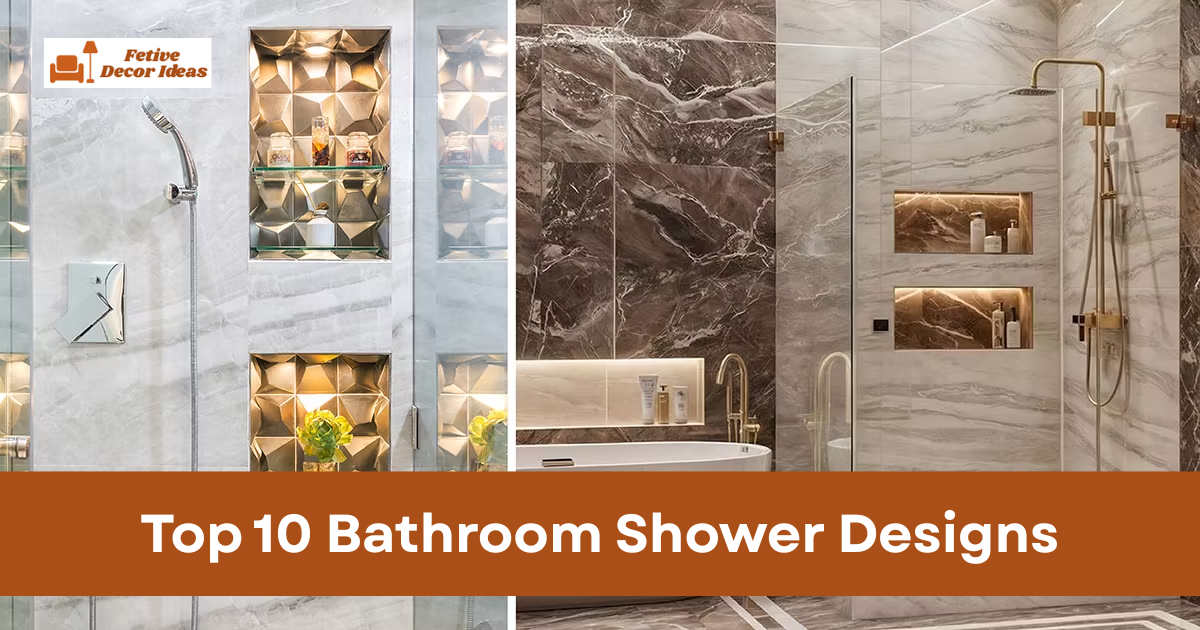
Bathroom shower designs define the entire feel of your bathroom. I always tell homeowners that the shower area sets the design tone. A well-designed shower improves both comfort and visual balance.
If you are planning a renovation, choosing the right shower design saves space and prevents regret. I will share practical and modern shower designs that work in real homes. Let us begin with structured concepts that feel intentional.
What Makes a Bathroom Shower Design Look Complete
A complete bathroom shower design combines layout, materials, and lighting. I always plan the enclosure and tile together. Random choices create a disconnected look.
Shower placement should respect the space size and plumbing lines. Design works best when function supports it. Below are shower designs that create a strong visual impact.
1. Curved Glass Bathroom Shower Design
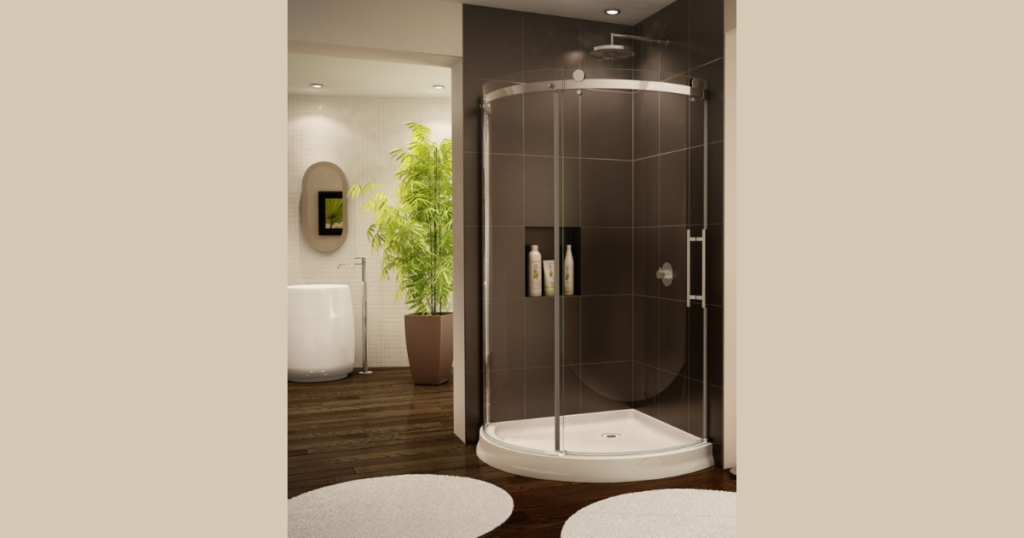
Curved glass shower designs soften sharp bathroom corners. I recommend this in small or medium bathrooms. The rounded edge improves flow.
The curved enclosure adds a custom feel. It also prevents harsh angles in tight layouts. This makes movement easier.
Pair curved glass with simple wall tiles. Avoid heavy patterns nearby. Curved designs feel modern yet subtle.
2. Black Frame Grid Shower Design
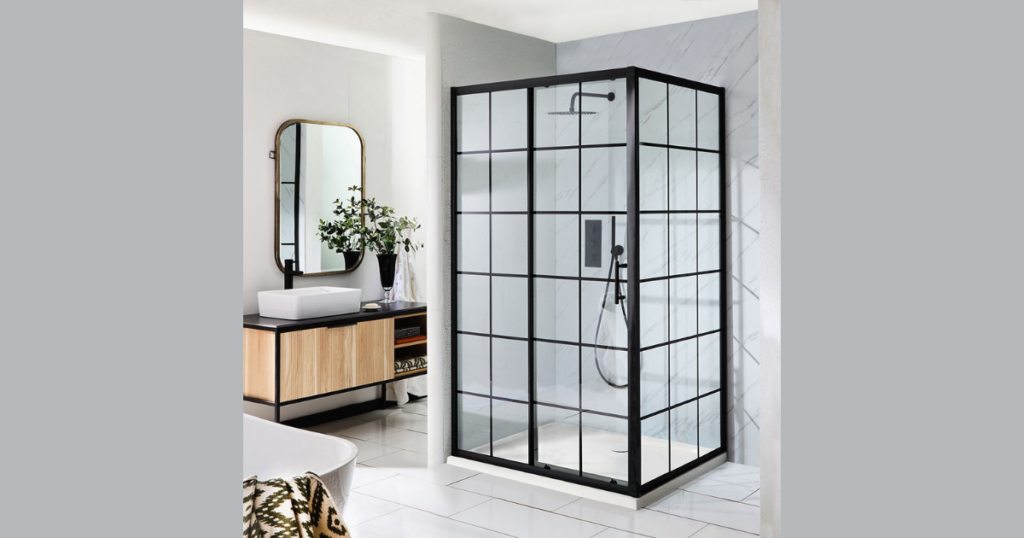
Black frame grid shower designs create bold contrast. I often use this in industrial or contemporary homes. It defines the shower area clearly.
The grid pattern adds structure without extra decor. It works well with neutral tile backgrounds. The look feels confident and sharp.
Balance dark frames with bright lighting. Avoid overcrowding with heavy cabinetry. This design stands out naturally.
3. Floor-to-Ceiling Tiled Shower Design
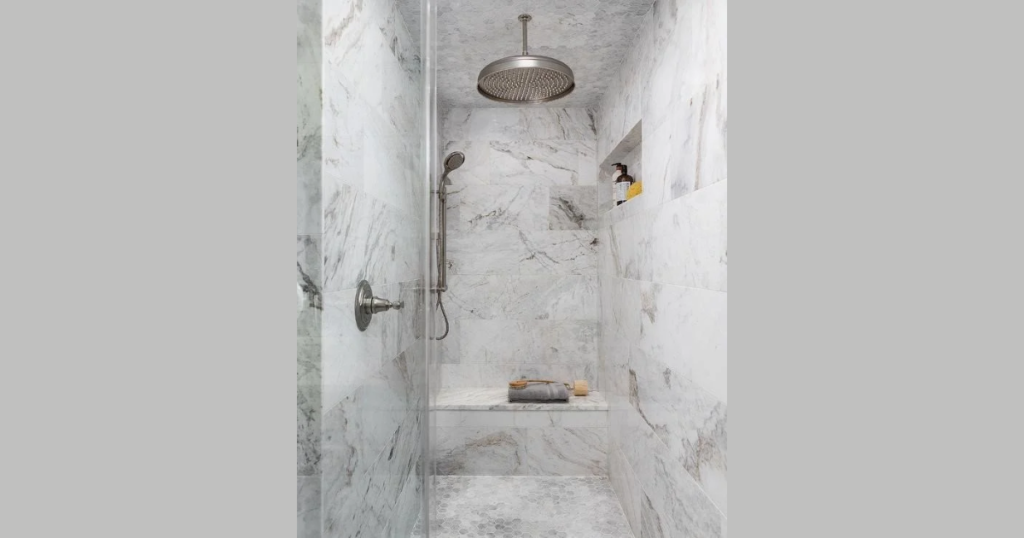
Floor-to-ceiling tiled shower designs create vertical drama. I prefer this in bathrooms with standard ceiling height. It visually elongates the space.
Extending the tile fully upward reduces paint maintenance. It protects walls from moisture. The result feels cohesive.
Choose one consistent tile style. Keep grout lines aligned. This design works best in modern bathrooms.
4. Hidden Drain Linear Shower Design
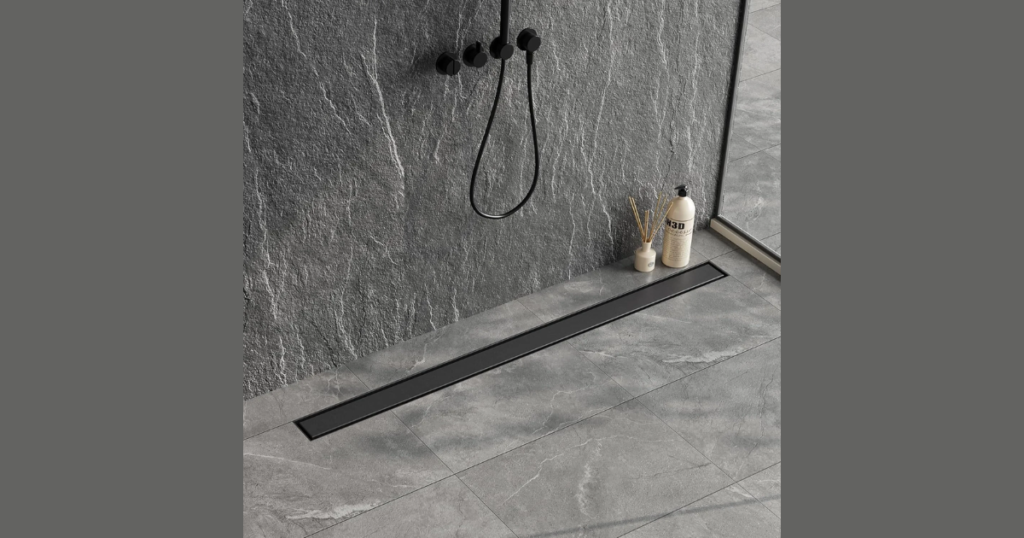
Hidden drain linear shower designs look clean and refined. I suggest this for minimalist interiors. It removes bulky drain covers.
Place a slim linear drain along one edge. This improves water flow direction. The shower floor appears seamless.
Use large tiles to complement the hidden drain. Maintain proper slope for safety. Linear drains improve modern appeal.
5. Stone Panel Bathroom Shower Design
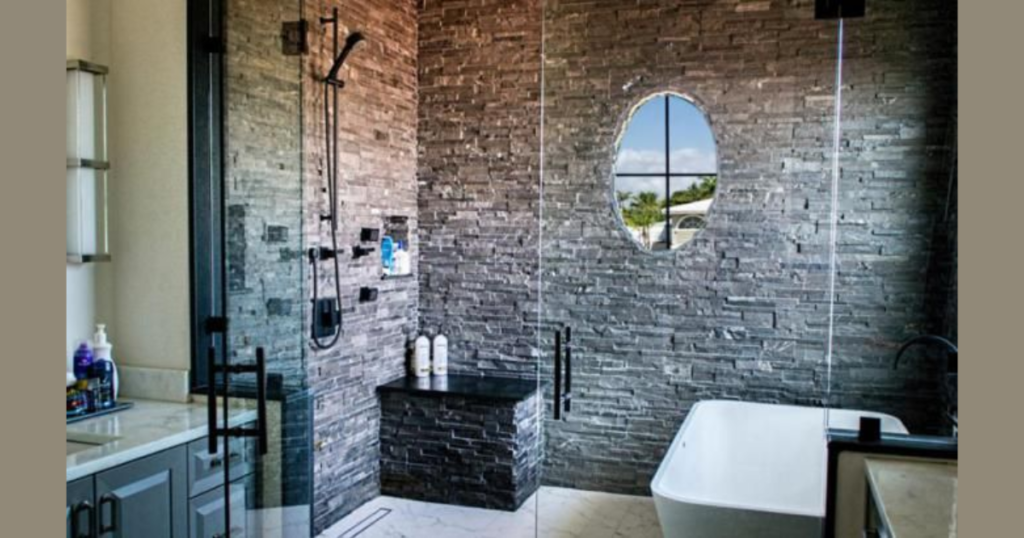
Stone panel shower designs create natural texture instantly. I like this option for spa-inspired bathrooms. It feels warm and grounded.
Large stone panels reduce grout lines. This lowers maintenance effort. The design looks organic.
Seal natural stone properly for moisture protection. Avoid overly dark tones in small rooms. Stone panels add natural elegance.
6. Recessed Entry Bathroom Shower Design
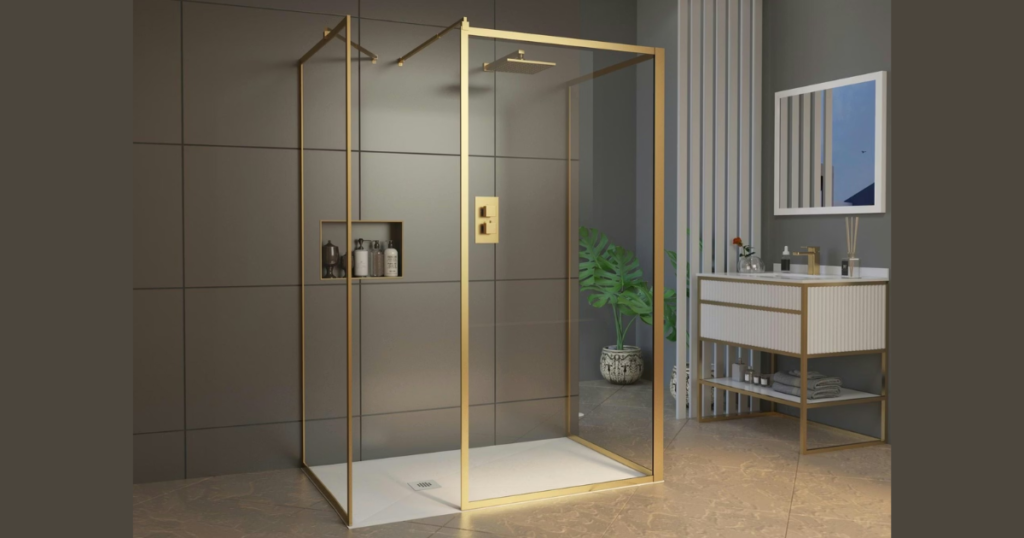
Recessed entry shower designs remove the need for a door. I like this layout in medium-sized bathrooms. It creates a smooth transition from the dry to the wet zone.
Build a short entry wall to block water splash. This keeps the design open yet controlled. Movement feels natural.
Use consistent floor tiles inside and outside the shower. Maintain correct slope for drainage. Recessed entries look custom and clean.
7. Dual Shower Head Bathroom Shower Design
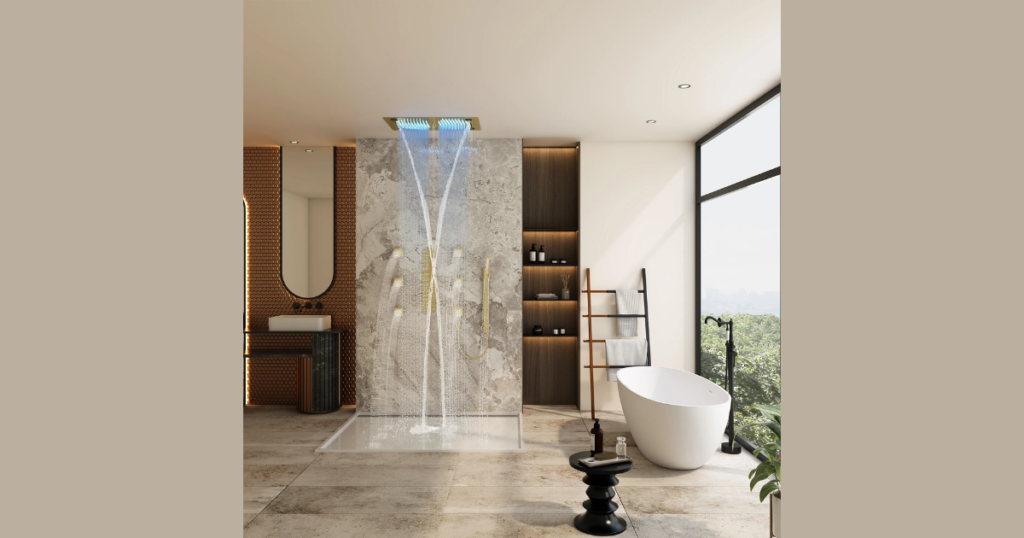
Dual shower head designs improve functionality for shared use. I recommend this in master bathrooms. It increases comfort during busy mornings.
Install two shower heads on opposite walls. This distributes water evenly. The design supports simultaneous use.
Ensure plumbing supports water pressure. Keep spacing comfortable for two users. Dual systems enhance usability.
8. Frosted Glass Shower Design
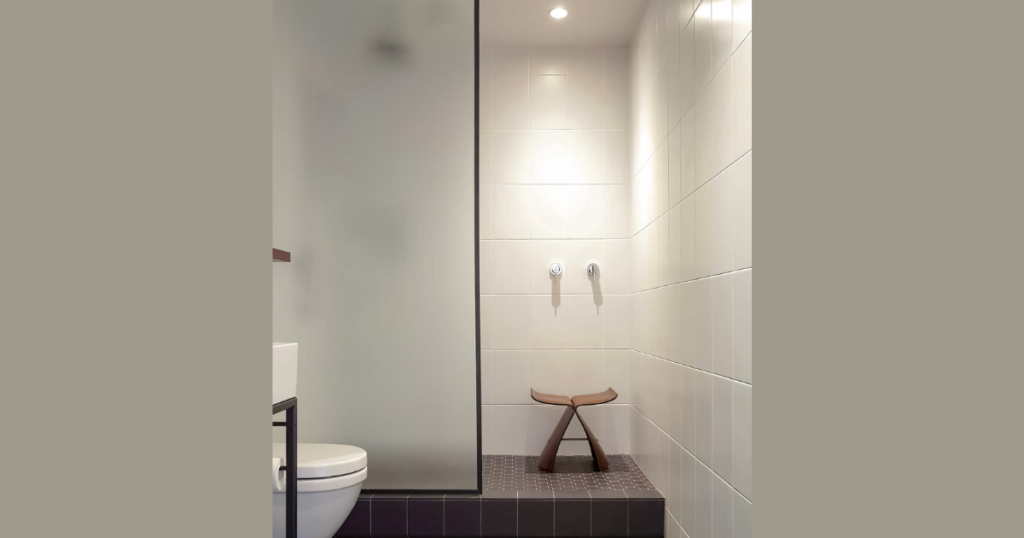
Frosted glass shower designs provide privacy without blocking light. I prefer this in shared family bathrooms. It balances openness and discretion.
The soft finish diffuses light beautifully. It hides watermarks better than clear glass. Maintenance becomes easier.
Pair frosted glass with neutral tiles. Avoid heavy decorative patterns. This design feels calm and practical.
9. Raised Platform Shower Design
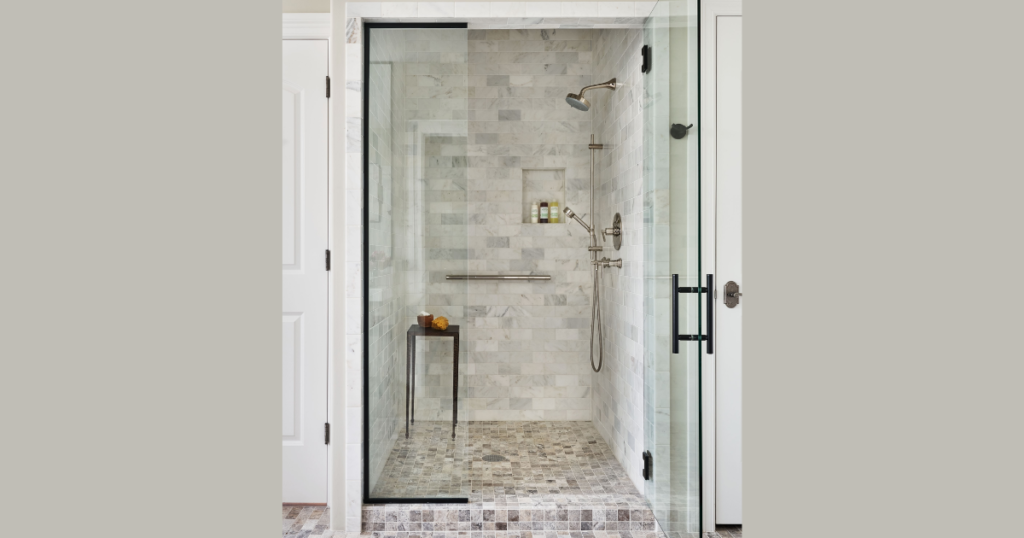
Raised platform shower designs create subtle elevation. I suggest this where floor leveling needs adjustment. It defines the shower zone clearly.
The slight step separates wet and dry areas. It prevents water from spreading. The layout becomes structured.
Use slip-resistant tiles for safety. Keep platform height minimal. Raised designs work well in modern renovations.
10. Wood Accent Bathroom Shower Design
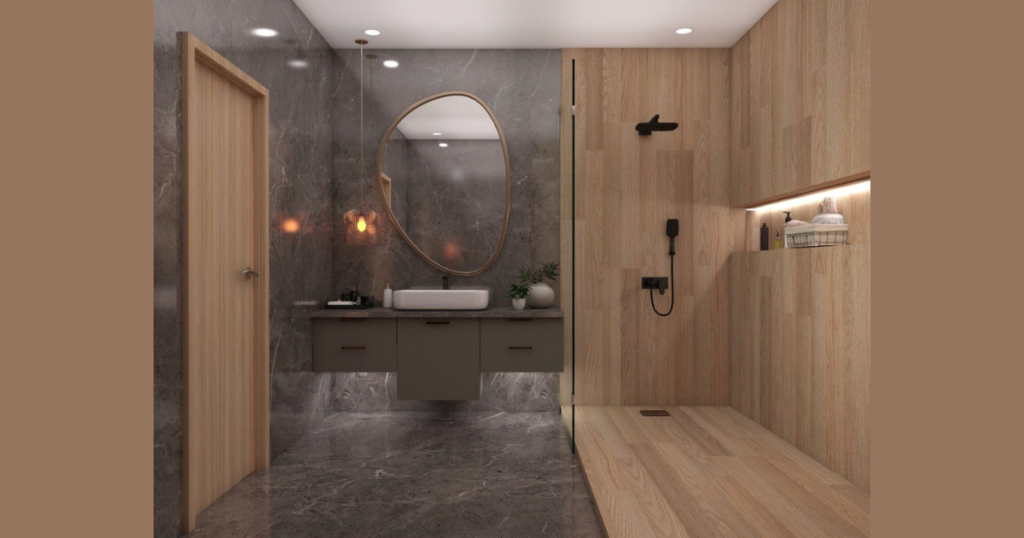
Wood accent shower designs add warmth to modern bathrooms. I often use wood-look panels instead of real wood. Moisture resistance remains important.
Place wood texture on one feature wall only. This prevents visual heaviness. The shower feels inviting.
Combine wood accents with matte black or chrome fixtures. Seal materials properly. Wood-inspired designs feel balanced and stylish.
Bathroom Shower Design Planning Guide
Consider these practical design factors:
- Choose the enclosure type based on the space size
- Ensure proper drainage slope
- Maintain a comfortable entry width
- Select moisture-resistant materials
- Plan lighting above and inside the shower area
Conclusion
Bathroom shower designs influence both style and daily comfort. I always recommend planning the layout first before choosing finishes. Good structure supports long-term satisfaction.
From curved glass and recessed entries to dual heads and stone panels, each design suits a specific space and lifestyle. Small bathrooms benefit from space-saving layouts, while larger spaces allow creative zoning.
If you read this conclusion first, remember this simple advice. Select a shower design that fits your space, respects drainage, and complements your overall bathroom theme. When planning comes first, design feels effortless.
FAQs
Linear drain and frameless glass designs feel modern and clean.
Yes, when finished with slip-resistant tiles.
Frosted glass offers more privacy and hides watermarks.
Yes, they require proper water pressure and pipe planning.
They need sealing to reduce grout cleaning effort.
Use wood-look waterproof panels instead of real wood.