
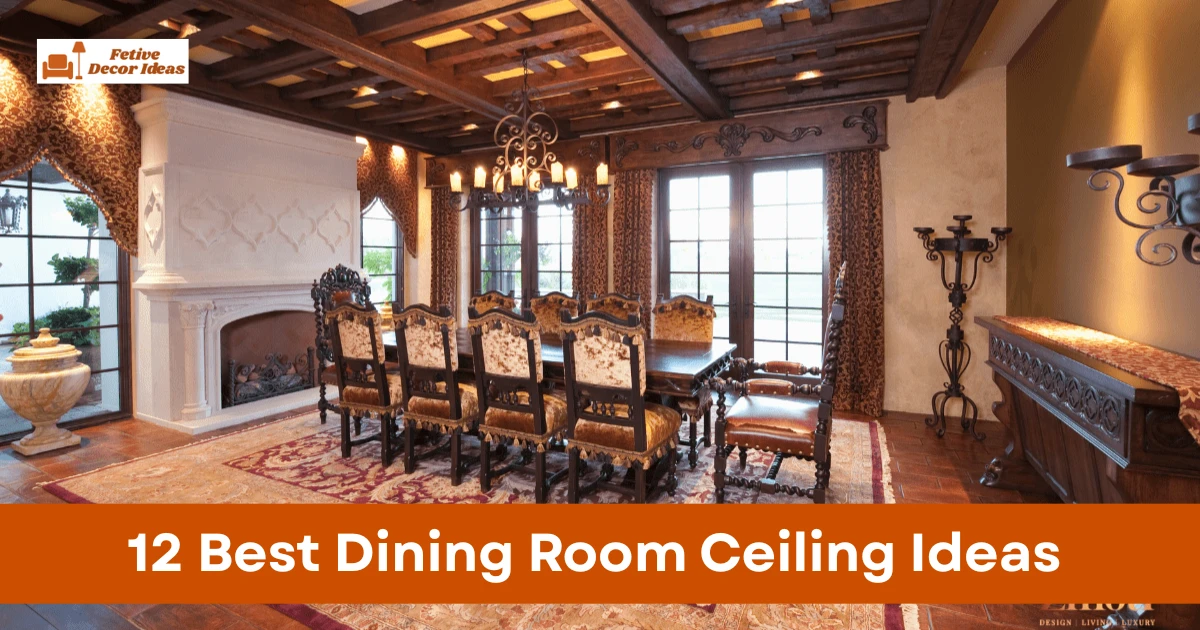
Dining room ceiling ideas help transform a plain space into something visually interesting and complete. I always notice that the ceiling often gets ignored, even though it has a huge impact on the room’s overall style.
A well-designed ceiling can make a dining room feel larger, brighter, and more elegant without changing furniture. The right materials, colors, or lighting choices can easily create a strong visual statement.
In this guide, I share practical dining room ceiling ideas that homeowners can actually use. These ideas focus on beauty, comfort, and realistic upgrades that work in both small and large homes.
What Makes a Dining Room Ceiling Look Attractive and Modern
A dining room ceiling looks attractive when it adds depth, texture, or lighting instead of staying flat and empty. I usually recommend combining structure with lighting so the ceiling becomes part of the decor instead of the background.
Color choice also plays an important role in ceiling design because it influences the room’s mood. Light colors create openness, while darker or wooden finishes add warmth and character.
Small upgrades can still create noticeable results without major renovation. Even paint, molding, or lighting changes can improve the dining room atmosphere more than people expect.
1. Tray Ceiling Design for Elegant Depth
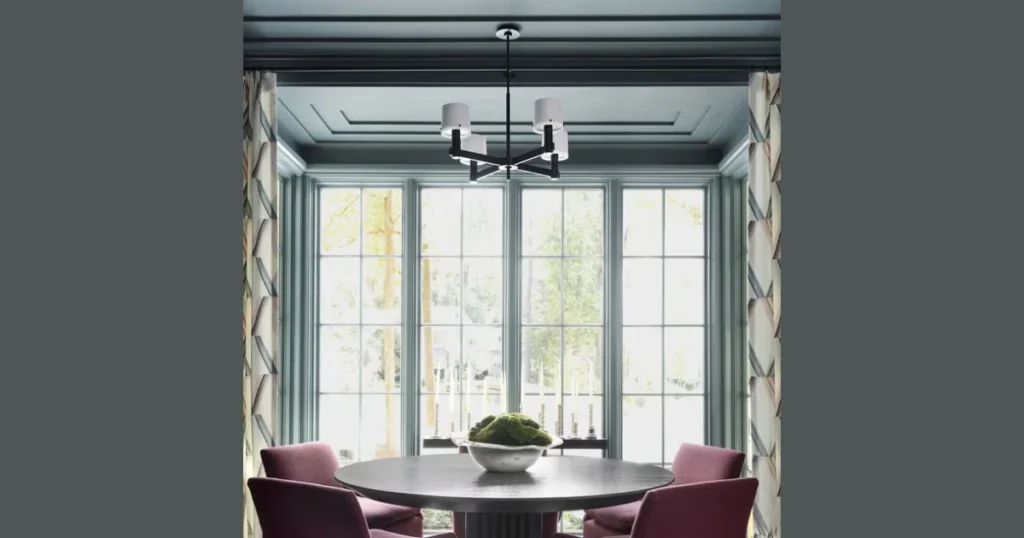
A tray ceiling creates visual depth because it adds layers that make the room look more spacious. I often recommend this design for homeowners who want a formal or upscale appearance without complicated construction.
Lighting inside the tray area enhances the effect by adding soft illumination. LED strip lighting or recessed lights can highlight the layered structure and create a comfortable dining atmosphere.
This ceiling style works well in both modern and traditional homes because it feels balanced. I personally find tray ceilings one of the most effective ways to add architectural interest without overcrowding the space.
2. Wooden Beam Ceiling for Warm Character
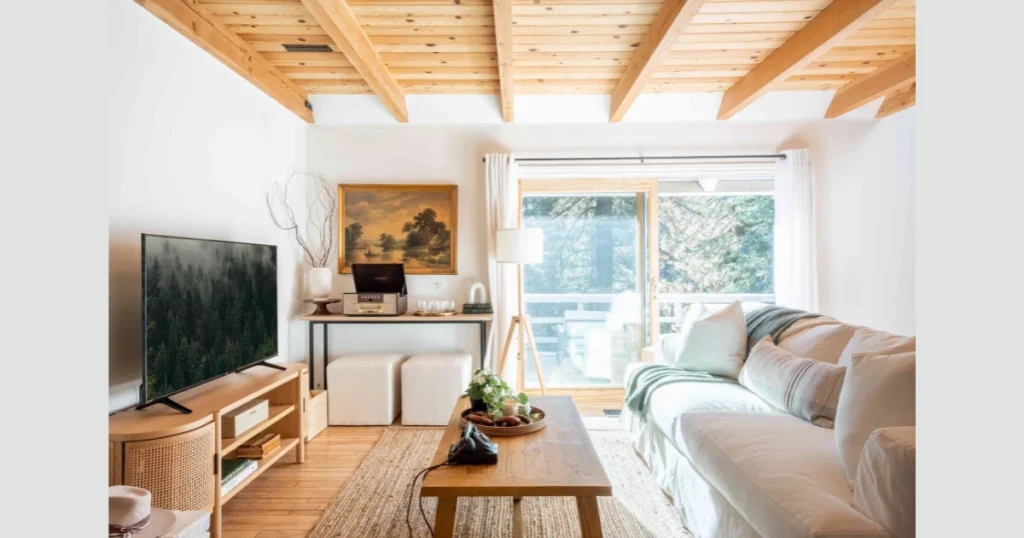
Wooden beams add warmth because natural materials create a welcoming and comfortable feeling. I like using exposed beams or faux beams to introduce texture without requiring structural changes.
Dark wood beams often create contrast against lighter ceilings, which adds depth and style. This combination works especially well in farmhouse, rustic, or transitional dining room designs.
Even lightweight decorative beams can produce a strong visual effect. I have seen simple dining rooms look more inviting immediately after adding beam details across the ceiling.
3. Modern False Ceiling with Recessed Lighting
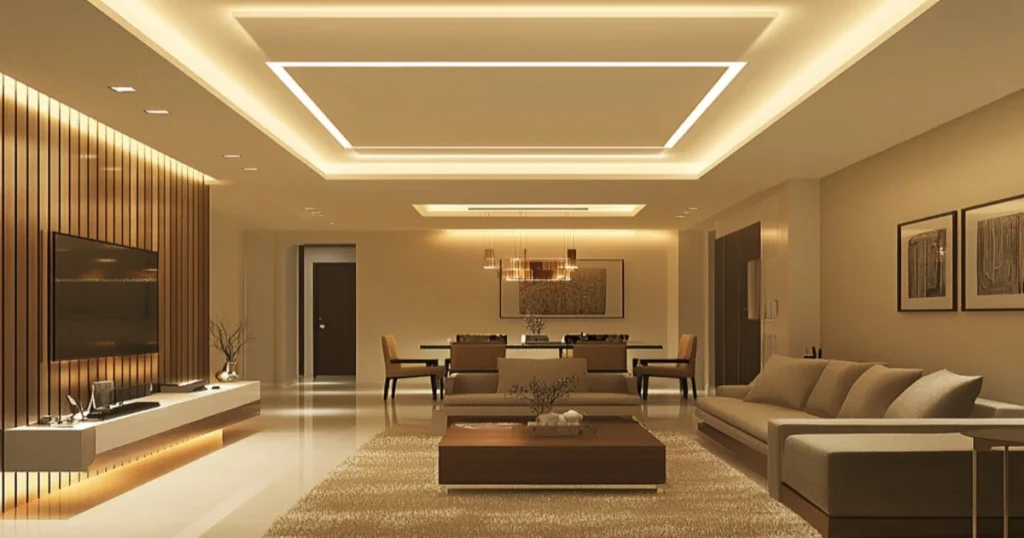
A false ceiling improves appearance because it hides wiring while creating a clean layered design. I usually recommend recessed lighting since it provides even illumination without bulky fixtures.
This ceiling style works well in contemporary homes because it looks neat and organized. Straight lines and minimal details help maintain a modern dining room atmosphere.
False ceilings also allow flexibility in lighting placement. I personally like combining recessed lights with a central pendant to balance function and style.
4. Painted Ceiling for a Budget-Friendly Upgrade
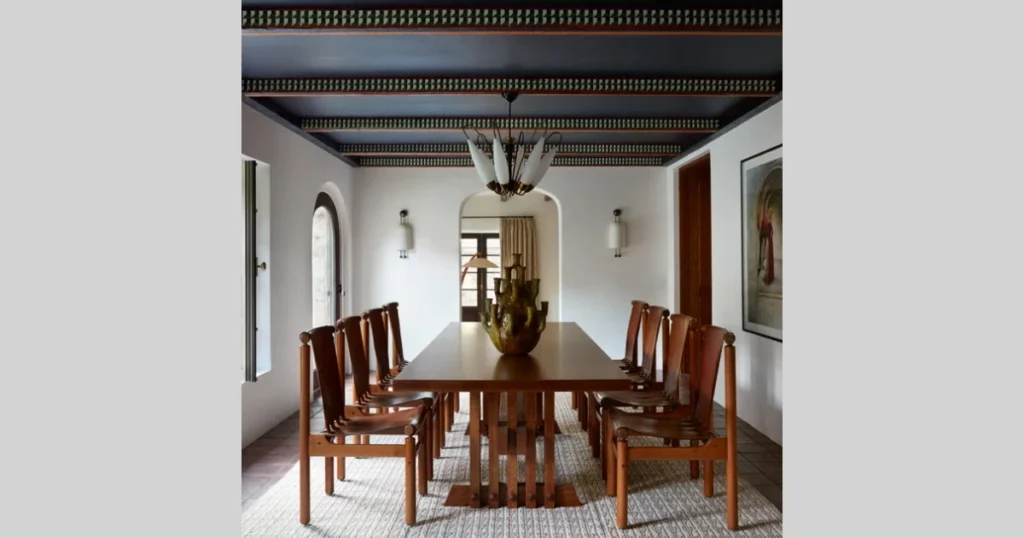
A painted ceiling creates impact because color changes instantly draw attention upward. I often suggest soft neutrals, pale blue, or warm tones, depending on the room’s furniture and lighting.
Darker ceiling colors can add drama and depth when used carefully. Contrasting ceiling shades against lighter walls often makes the dining space feel more designed and intentional.
This idea works well for people who want affordable upgrades without construction work. Paint is one of the easiest ways to refresh a dining room without a major investment.
5. Coffered Ceiling for a Classic Formal Look
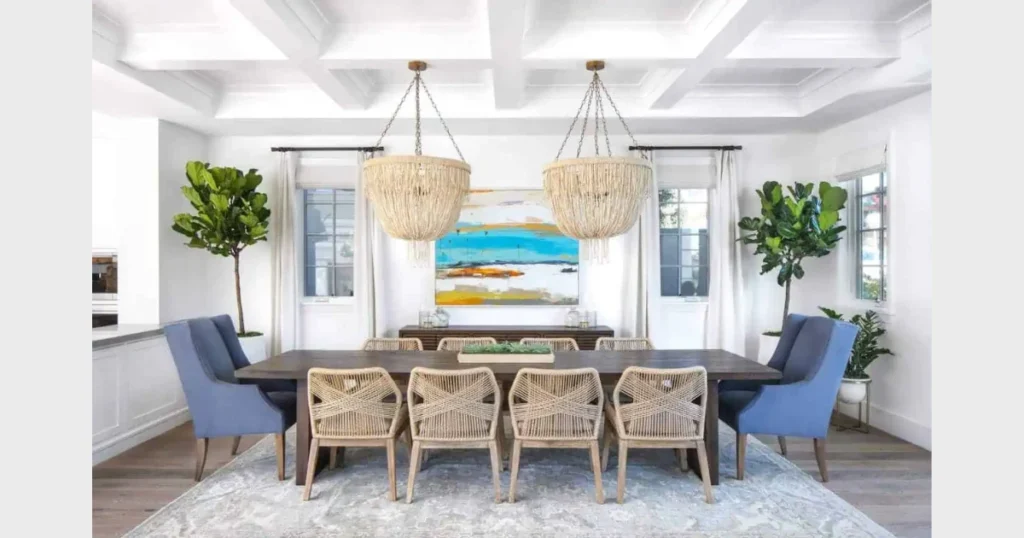
A coffered ceiling creates structure because it uses grid patterns that add architectural detail. I usually recommend this style for traditional or formal dining rooms where elegance matters.
Wood or painted coffered panels introduce depth while maintaining symmetry. This balanced design often makes the room feel more refined and professionally designed.
Although installation requires effort, the result can significantly improve the dining space. I often notice that coffered ceilings instantly increase the perceived value of a room.
6. Ceiling Wallpaper or Textured Panels for Visual Interest
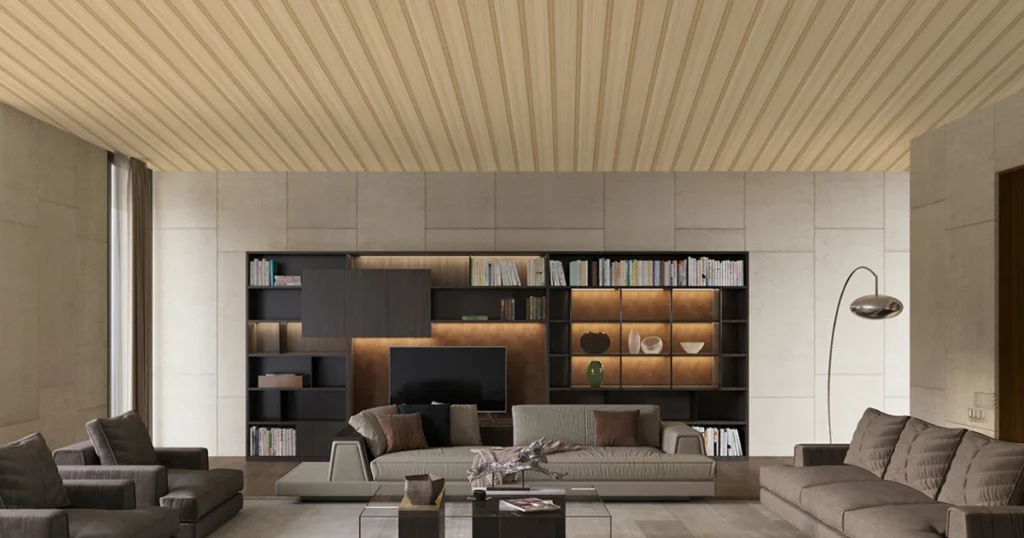
Ceiling wallpaper adds personality because patterns create unexpected visual appeal. I like subtle textures or geometric designs since they add interest without overwhelming the room.
Textured panels, such as PVC or decorative tiles, can also enhance the ceiling’s appearance. These materials often provide dimension while remaining lightweight and affordable.
This option works well for homeowners who want creative design without structural changes. I personally find ceiling wallpaper a fun way to introduce style without committing to permanent construction.
7. Statement Chandelier Ceiling Focus for Dining Rooms
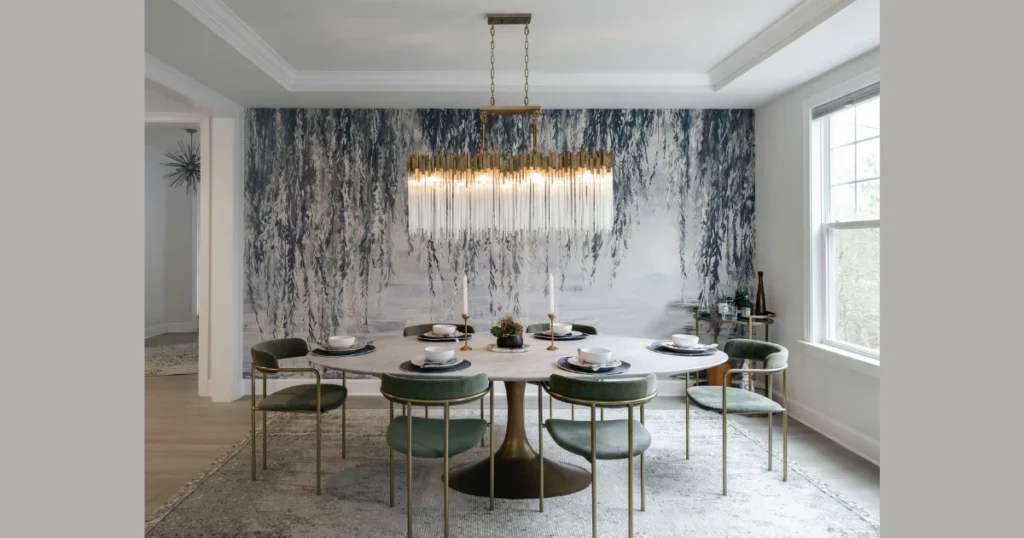
A statement chandelier creates a focal point because lighting naturally draws attention to the ceiling area. I usually recommend choosing a fixture size that matches the dining table so the room feels balanced and visually pleasing.
Decorative ceiling medallions can enhance the chandelier’s impact by adding architectural detail. This small addition often makes the lighting fixture appear more intentional and refined without major renovation.
Even simple dining rooms can look elegant with the right chandelier placement. I personally believe lighting is one of the fastest ways to improve a ceiling without changing the structure.
8. Wood Plank Ceiling for Natural Texture
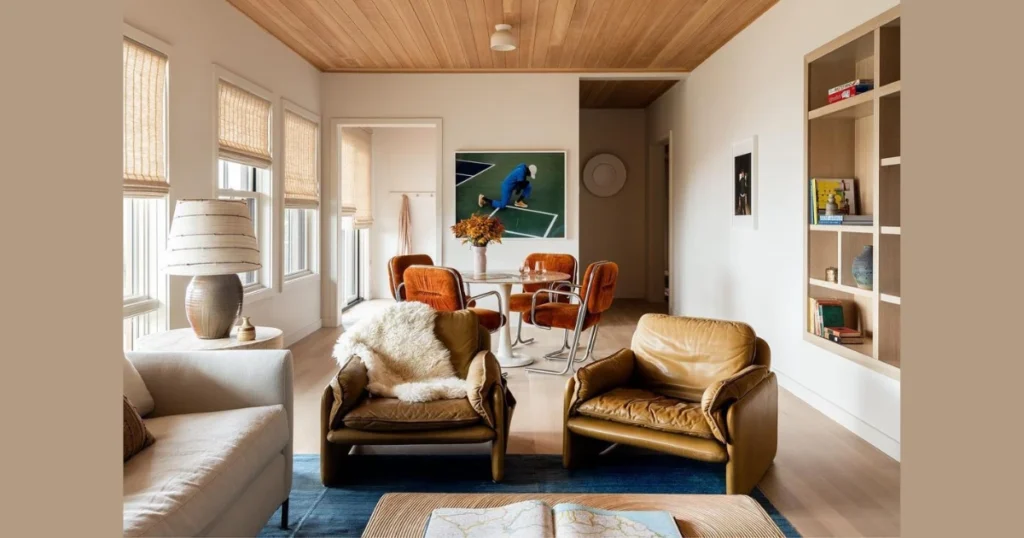
Wood plank ceilings add warmth because natural textures make the dining space feel comfortable and inviting. I often suggest lighter wood tones for modern homes and darker finishes for traditional interiors.
Planks installed in linear patterns can visually lengthen the room and create a structured appearance. This approach works especially well in open dining areas connected to kitchens or living spaces.
Faux wood panels are also available for budget-friendly upgrades. I have noticed that even affordable wood finishes can create a strong visual impact when installed neatly.
9. Ceiling with LED Strip Lighting for Ambient Glow
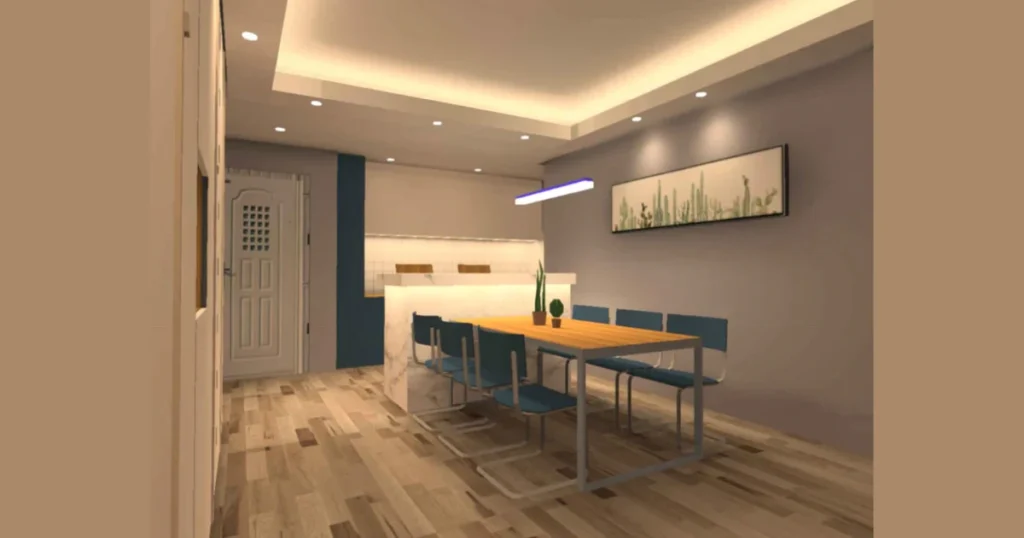
LED strip lighting improves the atmosphere because indirect light creates softness and depth. I like placing LED strips along tray edges, false ceiling borders, or hidden coves to create a layered lighting effect.
Warm white lighting usually works best for dining rooms since it feels cozy and welcoming. Adjustable color options can also help change the mood during gatherings or celebrations.
This idea works well for both modern and small dining rooms because it does not require bulky fixtures. I personally find LED lighting one of the most practical ceiling upgrades available today.
10. Minimalist White Ceiling with Clean Lines
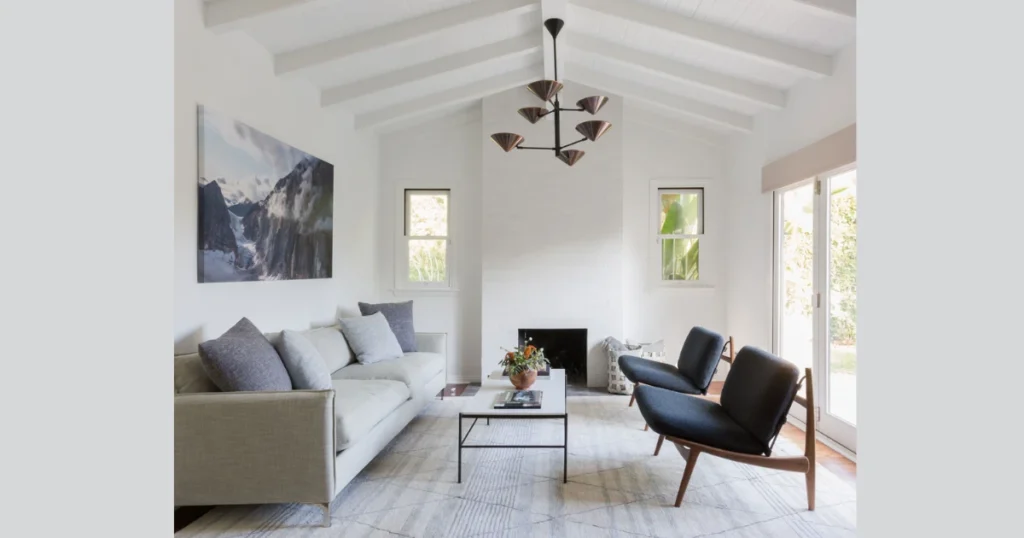
A minimalist white ceiling creates brightness because light colors reflect natural and artificial light effectively. I often recommend this style for smaller dining rooms where openness matters more than decoration.
Simple molding or subtle trim can add interest without overwhelming the design. Clean lines maintain a modern appearance while keeping the space visually calm and organized.
This approach works perfectly for homeowners who prefer simplicity over decorative elements. I personally like minimalist ceilings because they never go out of style and match any decor changes.
11. Decorative Ceiling Molding for Subtle Elegance
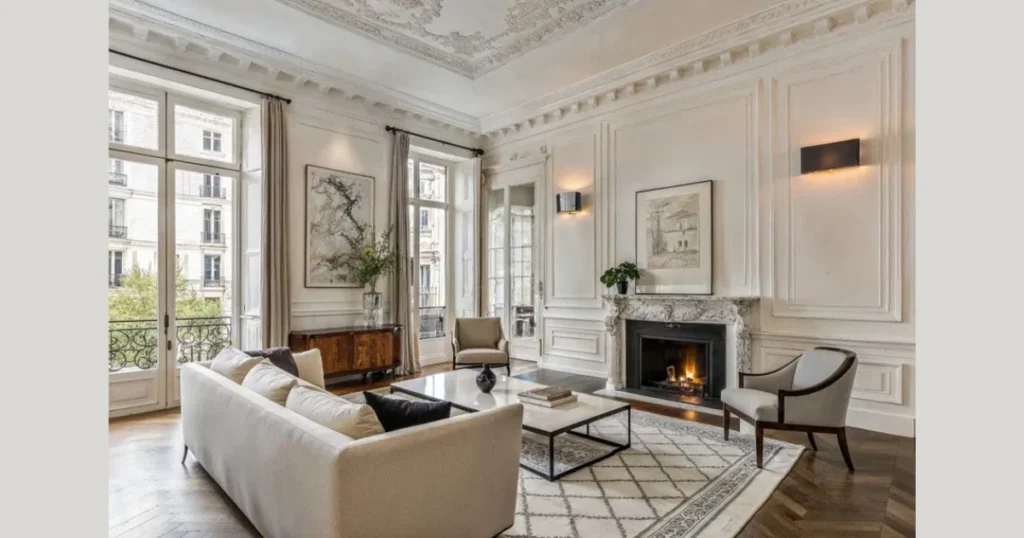
Ceiling molding adds refinement because it introduces detail without heavy construction. I usually suggest crown molding or geometric trim patterns to create a polished dining room appearance.
Painted molding in the same color as the ceiling keeps the look subtle and sophisticated. Contrasting molding colors can also create a stronger visual statement when desired.
This idea works well for both modern and traditional homes because it is flexible. I have seen even basic dining rooms look more finished after installing molding details.
12. Two-Tone Ceiling Color for Modern Contrast
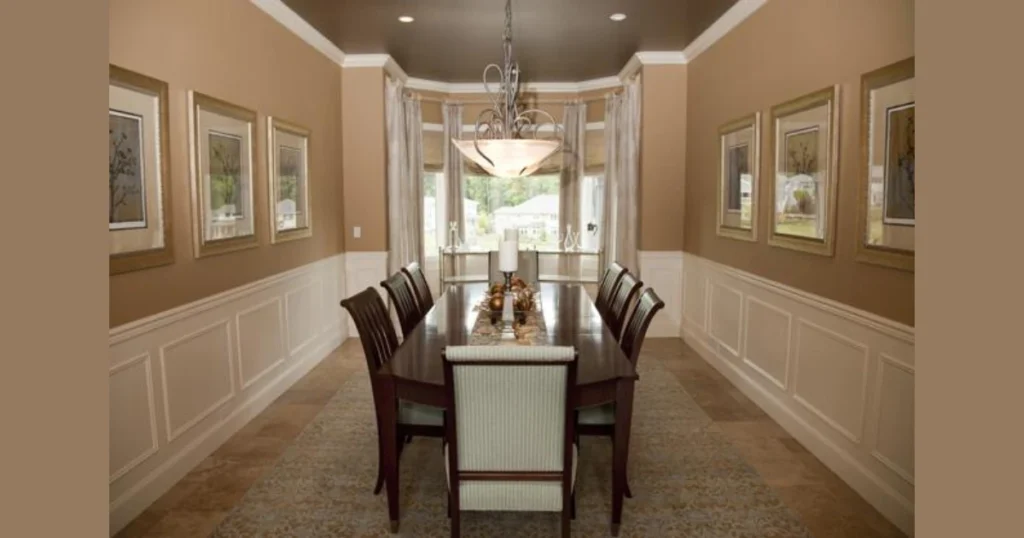
A two-tone ceiling creates visual contrast because color variation adds depth and interest. I often recommend pairing neutral tones with slightly darker shades to maintain balance.
This design works especially well with tray or layered ceilings where color sections naturally exist. Coordinated wall and ceiling colors help create a cohesive and stylish atmosphere.
Even small color contrasts can improve the room’s appearance significantly. I personally enjoy this approach because it adds character without requiring expensive materials.
Conclusion
Dining room ceiling ideas can completely change how a space feels without replacing furniture or decor. The right ceiling design adds depth, lighting, and character that make the room look finished and welcoming.
Simple upgrades like paint, lighting, or molding can create noticeable improvement even on a small budget. Larger options like tray or coffered ceilings add architectural interest for homeowners wanting a more refined appearance.
If you focus on lighting balance, color harmony, and proportion, your dining room ceiling will naturally enhance the entire space. A thoughtful ceiling design often becomes the detail guests notice first.
FAQs
Tray ceilings, false ceilings with lighting, and wooden beam ceilings are popular choices depending on style preference.
Paint, LED lighting, molding, or wallpaper can improve ceiling appearance without major expense.
Yes, false ceilings allow lighting placement flexibility and create a clean, modern appearance.
White, neutral shades, soft pastels, and light tones usually work best for brightness and balance.
No, properly spaced beams often add depth and character without reducing visual space.
Yes, LED lighting provides soft illumination and helps create a comfortable dining atmosphere.
Related Posts
- 12 Best Formal Dining Room Ideas
- Modern Dining Room Decor Ideas
- Top 15 Dining Room Table Ideas
- 12 Best Minimalist Dining Room Ideas
- Top 12 Dining Room Centerpiece Ideas