

Professional dining room flooring ideas focus on durability, style, and daily practicality. I always look for flooring that handles spills, chair movement, and foot traffic without losing its visual appeal.
In this guide, I share dining room flooring options that feel polished, realistic, and suitable for real homes.
Why Flooring Choice Matters in a Dining Room
Dining room flooring shapes how the space looks and functions every day. I have seen great dining rooms fail simply because the floor could not handle stains, scratches, or regular cleaning. A professional flooring choice balances appearance with performance.
Flooring also affects comfort and acoustics in the dining area. Hard surfaces amplify sound, while textured finishes soften it. When flooring works well, the dining room feels welcoming, clean, and easy to maintain.
What Makes a Dining Room Flooring Look Professional
Professional dining room flooring looks intentional and well-matched with furniture. I always check how flooring pairs with dining tables, chairs, and rugs. When these elements align, the room feels cohesive and thoughtfully designed.
Durability defines professionalism in flooring. Materials that resist moisture, dents, and wear help the dining room stay presentable for years. A professional floor never looks tired after a few family dinners.
1. Solid Hardwood Flooring for a Timeless Dining Room
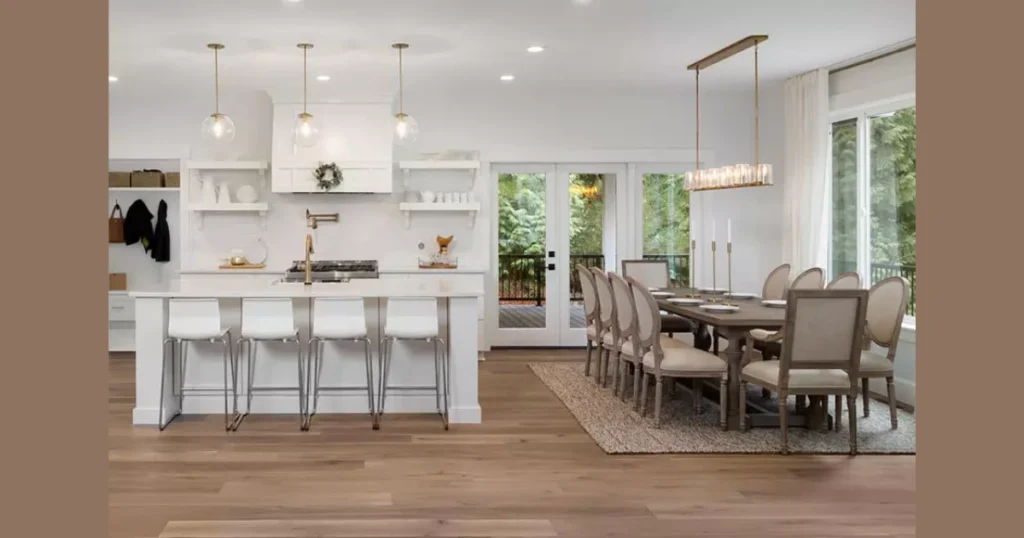
Solid hardwood flooring brings warmth and structure to a dining room. I like how hardwood instantly makes the space feel formal yet comfortable. Its natural grain adds character without overpowering the room.
Hardwood works well in dining rooms where furniture stays in place. Chairs slide smoothly, and area rugs sit flat without curling. With proper sealing, hardwood handles spills when cleaned quickly.
Maintenance keeps hardwood looking professional. Regular sweeping and occasional refinishing protect its surface. I recommend felt pads under chairs to prevent scratches and keep the floor looking polished.
2. Engineered Wood Flooring for Stability and Style
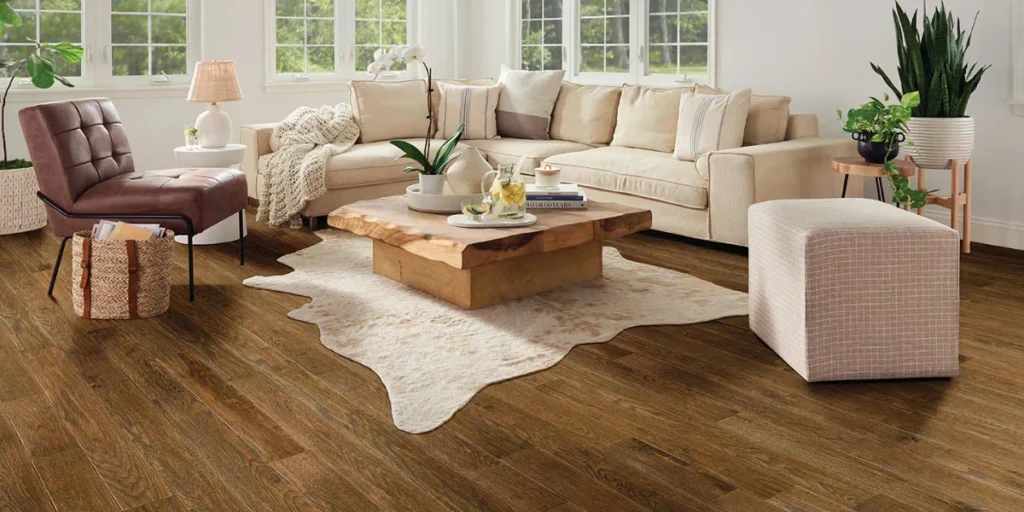
Engineered wood flooring offers the look of hardwood with added stability. I often suggest it for homes with temperature changes or humidity concerns. It resists warping better than solid wood.
This flooring suits dining rooms used daily. It handles chair movement and foot traffic while maintaining a clean finish. The layered construction adds strength without sacrificing appearance.
Cleaning engineered wood stays simple. A damp mop and routine care keep it fresh. I like this option when homeowners want elegance without worrying too much about moisture.
3. Porcelain Tile Flooring for Easy Maintenance
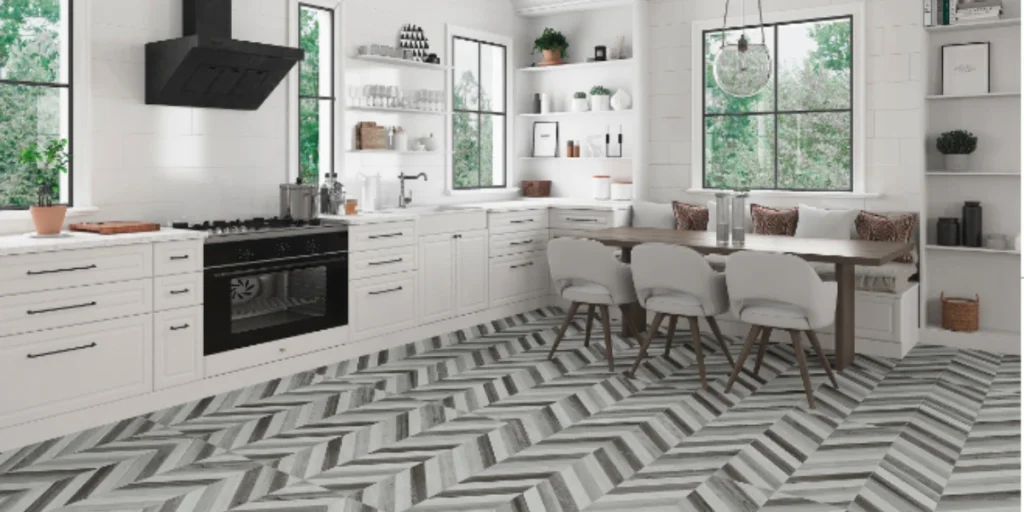
Porcelain tile flooring fits dining rooms where spills happen often. I appreciate how it resists stains, water, and scratches without special treatment. It stays reliable during family gatherings.
Tile offers endless design choices. Large-format tiles reduce grout lines, making the dining room look cleaner and more open. Neutral tones work well with both modern and classic dining setups.
Maintenance feels effortless with porcelain tile. Regular sweeping and occasional mopping keep it spotless. This flooring works best when paired with area rugs for added comfort.
4. Luxury Vinyl Plank Flooring for Practical Homes
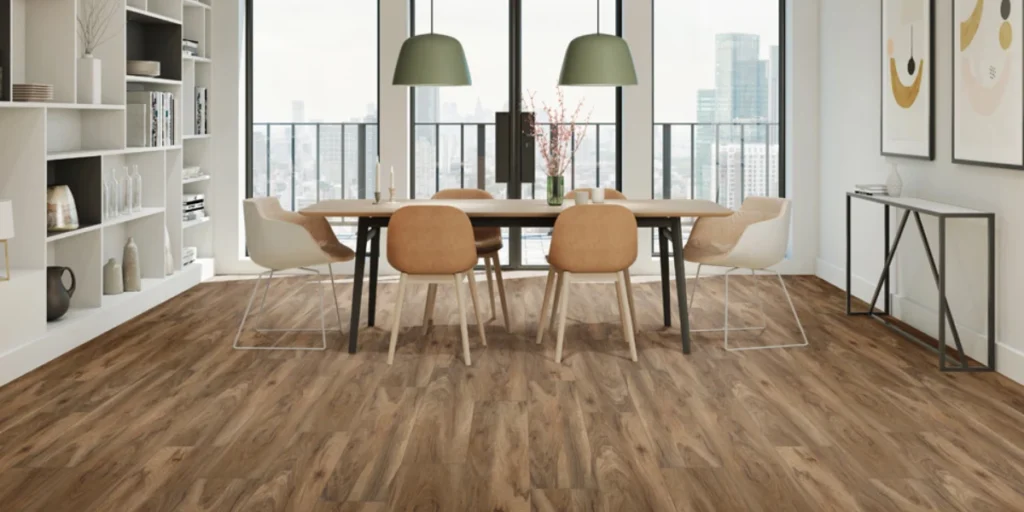
Luxury vinyl plank flooring gives a professional look without high maintenance. I recommend it for households with kids or frequent guests. It handles spills and movement without stress.
This flooring mimics wood textures convincingly. It pairs well with formal dining furniture while staying budget-conscious. The layered construction absorbs sound better than tile or hardwood.
Installation stays straightforward, and repairs remain manageable. I like luxury vinyl plank for dining rooms where durability matters more than tradition.
5. Natural Stone Flooring for Formal Dining Rooms
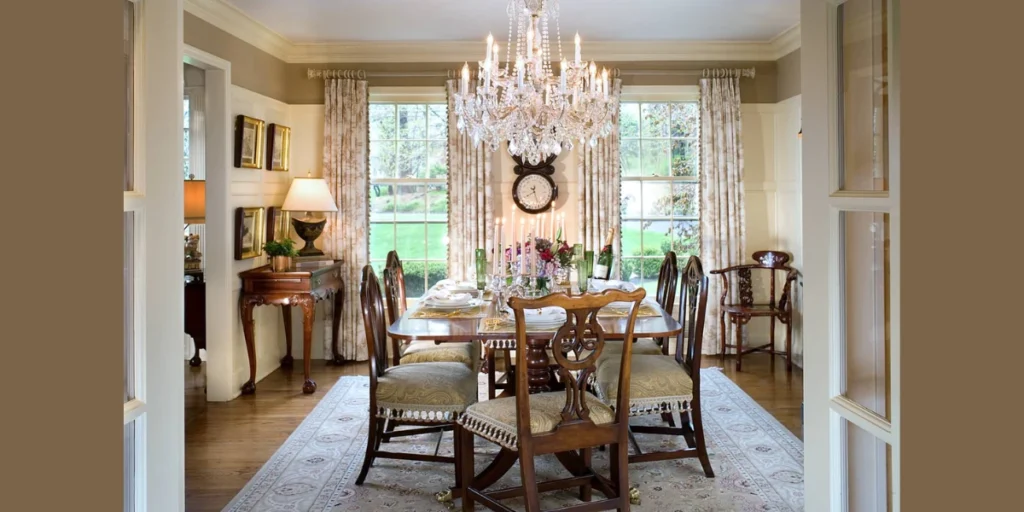
Natural stone flooring creates a strong visual statement in dining spaces. I find stone floors ideal for formal dining rooms with minimal clutter. They add texture and depth naturally.
Stone stays cool underfoot and resists wear over time. Sealed surfaces handle spills well when cleaned promptly. Marble, slate, and limestone each offer unique visual appeal.
Maintenance requires commitment. Regular sealing protects the surface and keeps stains away. When cared for properly, stone flooring looks refined for decades.
6. Ceramic Tile Flooring for Balanced Style and Budget
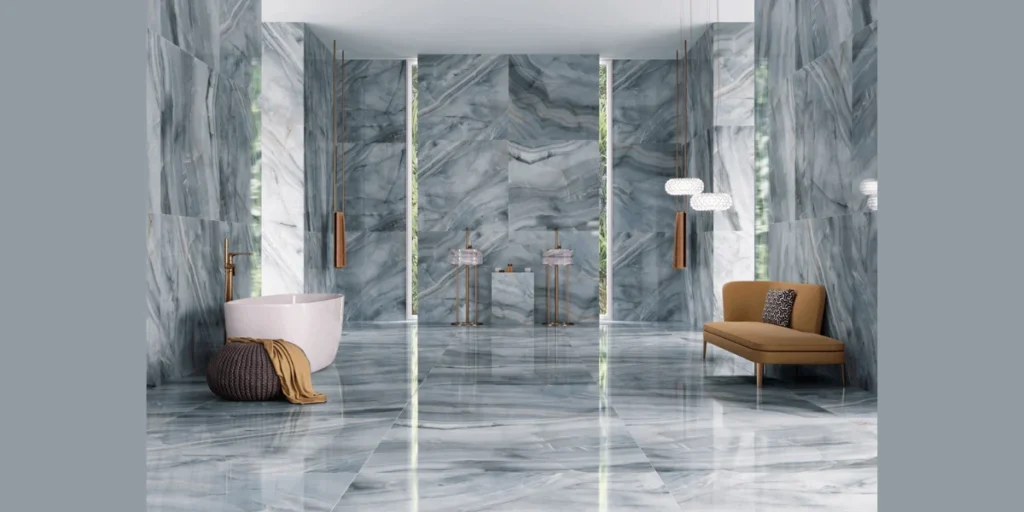
Ceramic tile flooring works well for dining rooms that need durability without high cost. I often suggest ceramic tiles when homeowners want a clean, professional look that stays practical for everyday use. This flooring handles spills and food stains with ease.
Ceramic tiles come in many finishes, including stone and wood-look designs. I like how these options help match different dining room styles without overwhelming the space. Matte finishes reduce glare and keep the room looking calm and composed.
Cleaning ceramic tile stays simple and predictable. Regular sweeping and mopping keep it fresh, which matters in dining areas. With proper grout sealing, this flooring remains reliable for long-term dining room use.
7. Laminate Flooring for Affordable Professional Appeal
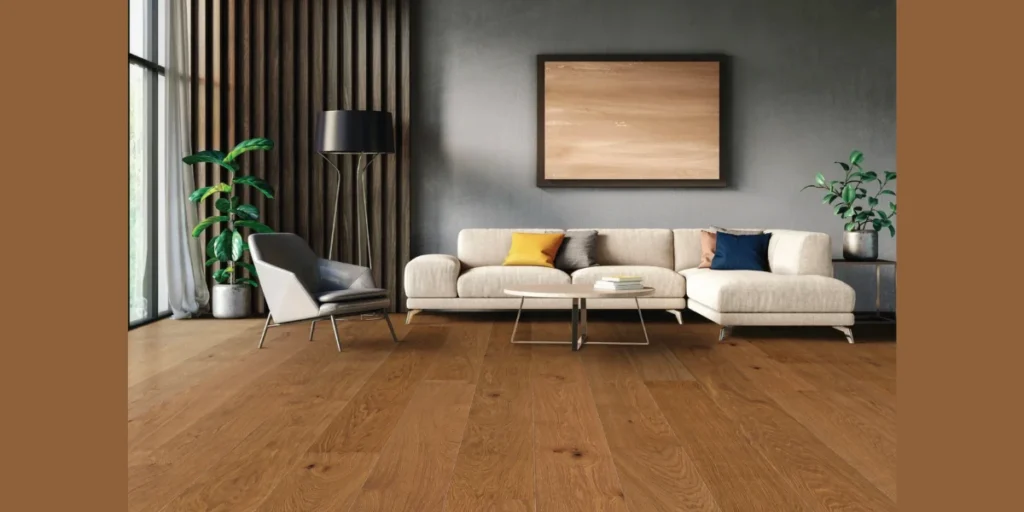
Laminate flooring offers a polished dining room look at a reasonable price. I recommend it when budget matters but style still feels important. Modern laminate mimics wood textures convincingly.
This flooring works best in dining rooms with moderate use. It resists surface scratches and stays stable under dining furniture. I find laminate suitable for homeowners who want visual consistency without heavy upkeep.
Maintenance remains minimal with laminate flooring. Dry cleaning methods work best to avoid moisture damage. When chosen carefully, laminate maintains a neat appearance that feels well planned.
8. Concrete Flooring for Modern Dining Spaces
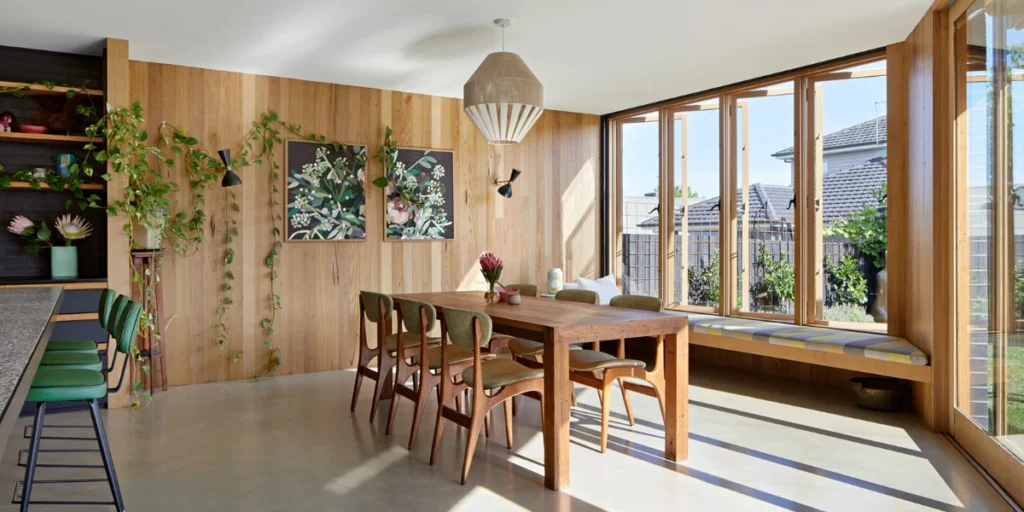
Concrete flooring fits dining rooms with a modern or industrial style. I have seen it work surprisingly well in open-plan homes where continuity matters. The smooth surface adds a clean, structured feel.
Concrete stays durable under heavy use and furniture movement. Sealed finishes protect against stains and moisture. I suggest lighter tones to keep dining spaces from feeling cold.
Maintenance focuses on sealing and routine cleaning. Rugs help soften sound and improve comfort. Concrete flooring suits homeowners who prefer simplicity with long-term strength.
9. Cork Flooring for Comfort and Noise Control
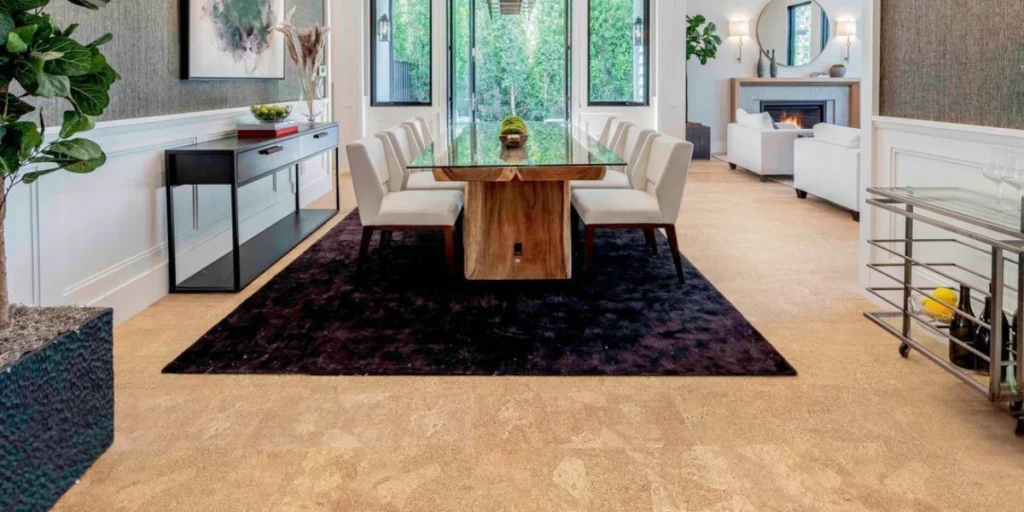
Cork flooring brings comfort into dining rooms without sacrificing professionalism. I like cork for homes where noise control matters. It absorbs sound better than hard surfaces.
This flooring feels warm underfoot and resists minor spills. Sealed cork handles dining use when maintained properly. It pairs nicely with wood dining furniture.
Care requires attention to sealing and moisture control. With regular upkeep, cork flooring stays comfortable and visually balanced for dining areas.
10. Bamboo Flooring for Sustainable Dining Rooms
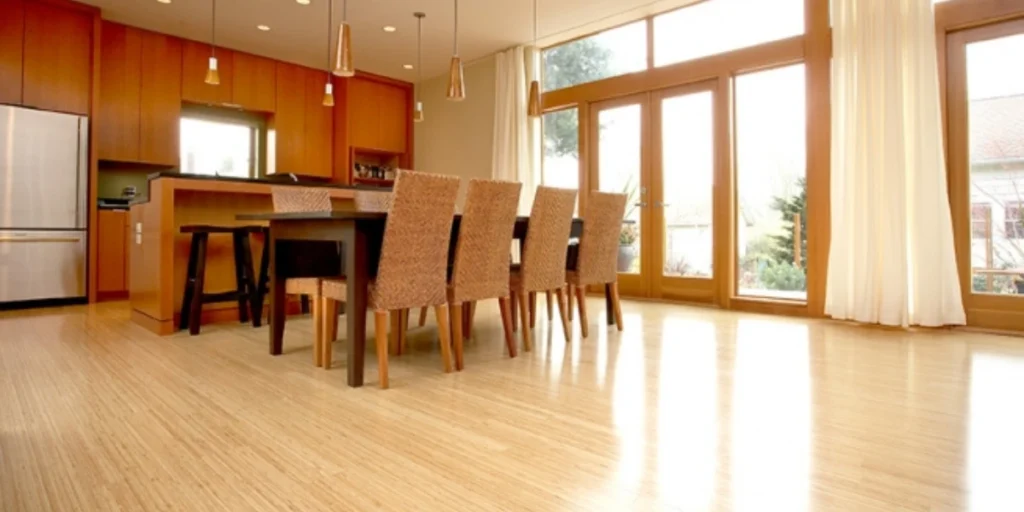
Bamboo flooring suits dining rooms focused on sustainability and clean design. I appreciate bamboo for its strength and smooth appearance. It performs well in controlled indoor environments.
This flooring resists wear and offers a modern look. I recommend strand-woven bamboo for better durability under dining furniture. Neutral finishes blend easily with most decor styles.
Maintenance stays manageable with gentle cleaning routines. Bamboo flooring works best when spills get cleaned quickly. It supports both style and responsible material choices.
Professional Tips for Choosing Dining Room Flooring
Choosing the right dining room flooring depends on lifestyle and design goals. I always suggest matching flooring with dining habits and furniture type. Practical decisions prevent long-term frustration.
Below is a quick comparison to guide selection:
| Flooring Type | Durability | Maintenance | Best For |
|---|---|---|---|
| Hardwood | High | Medium | Formal dining rooms |
| Tile | Very High | Low | High-use dining areas |
| Vinyl | High | Low | Family dining rooms |
| Stone | Very High | High | Luxury dining spaces |
| Cork | Medium | Medium | Quiet dining rooms |
Flooring choices feel easier when priorities stay clear. I prefer selecting flooring that supports daily use first, then style.
Conclusion
Professional dining room flooring ideas balance durability, comfort, and appearance. I always focus on how flooring performs during real meals and gatherings. Practical choices keep dining rooms looking polished longer.
From hardwood to tile and vinyl, each option serves different needs. When flooring supports daily life, the dining room feels inviting and stress free. Smart flooring decisions save time and maintenance later.
FAQs
Hardwood, tile, and vinyl perform best depending on usage and maintenance preference.
Yes, tile resists spills and stays easy to clean.
Hardwood, stone, and engineered wood create the most polished appearance.
Water resistance helps, especially in high-use dining areas.
Yes, rugs protect flooring and improve comfort.
Luxury vinyl plank and tile handle heavy use well.