

Dining room rug ideas can completely change how the space looks and feels, often more than people expect. I’ve seen dining rooms transform simply by adding the right rug in the right size.
A well-chosen rug doesn’t just add style, it defines the dining area, improves comfort underfoot, and brings balance to the room. In this article, I’ll share practical and design-focused rug ideas based on real interior planning principles.
Each idea considers daily use, chair movement, and visual harmony, helping you choose a rug that feels intentional, functional, and perfectly suited to your dining space.
1. Large Area Rug Under the Dining Table
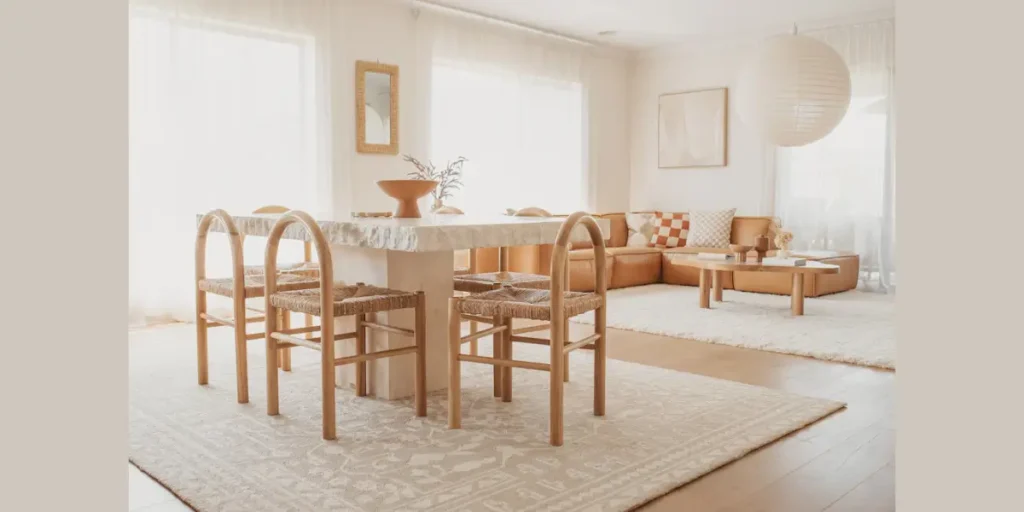
I always start with a large area rug when defining a dining space. A properly sized rug anchors the table and keeps the entire setup visually connected. The key is choosing a rug that allows chairs to remain on it even when pulled out.
I usually measure at least 24 inches beyond all sides of the table. This prevents awkward chair movement and keeps the space functional during everyday use. Size matters more than pattern here.
When chosen correctly, a large rug brings structure and polish to the dining room. It instantly makes the space feel intentional rather than loosely arranged.
2. Flatweave Rugs for Easy Chair Movement
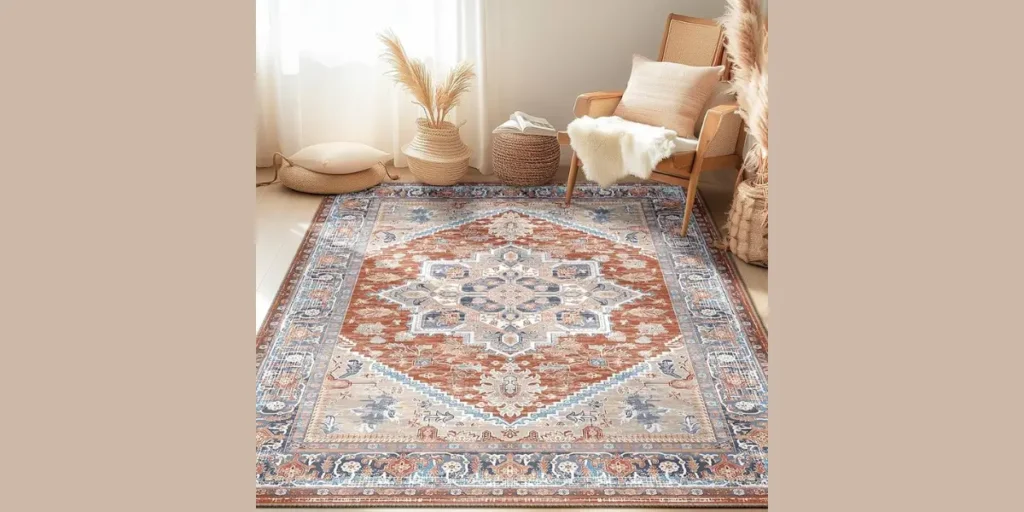
Flatweave rugs are one of my top recommendations for practical dining rooms. Their low-profile construction allows chairs to slide smoothly without catching or bunching up.
I often use flatweave rugs in high-use homes where ease of movement matters. They also sit flat against the floor, which reduces tripping hazards and keeps the dining area feeling clean and orderly.
Design-wise, flatweave rugs offer plenty of pattern options. They add visual interest without adding bulk, making them ideal for modern or casual dining rooms that prioritize function.
3. Neutral Rugs for a Timeless Dining Room
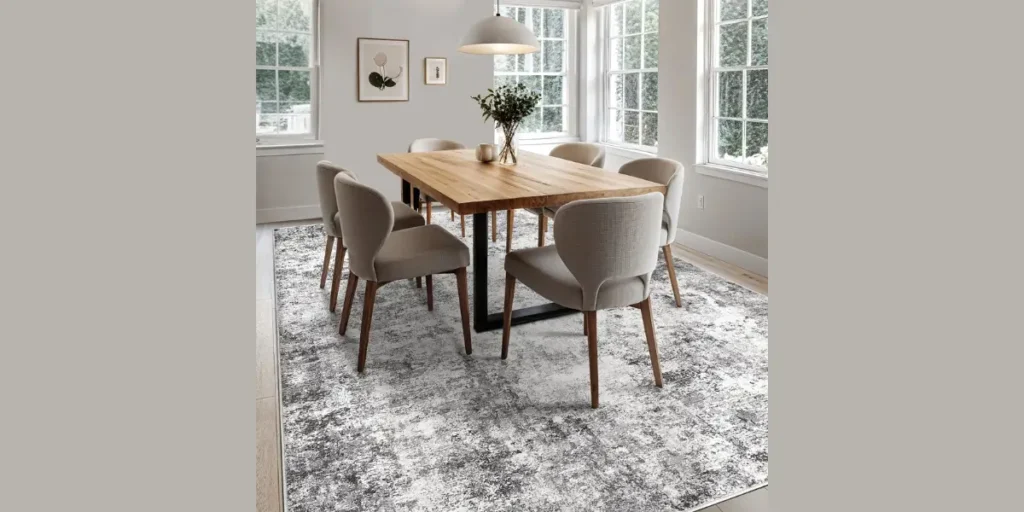
When longevity matters, I turn to neutral rugs. Shades like beige, gray, and soft taupe create a calm base that works with almost any dining furniture.
I’ve found that neutral rugs allow tables, chairs, and lighting to stand out without competing for attention. They also adapt easily when décor changes over time.
Neutral doesn’t mean boring. Texture plays a big role here. Subtle weaves or tone-on-tone patterns add depth while keeping the dining room refined and balanced.
4. Patterned Rugs to Add Character
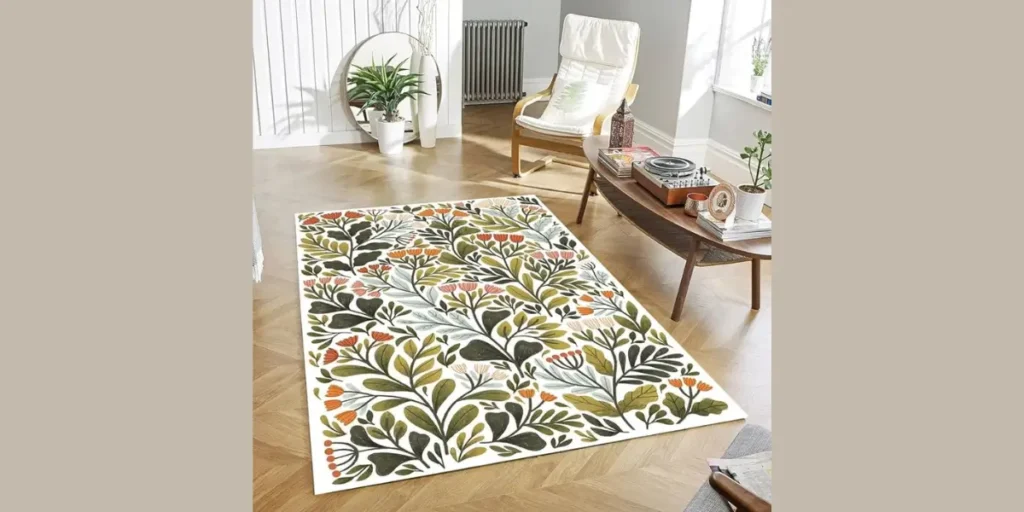
Patterned rugs bring personality into dining rooms that feel too plain. I use them when furniture lines are simple and the space needs visual energy.
Patterns help disguise minor spills and everyday wear, which makes them practical for active households. This is especially useful in family dining spaces.
I always balance patterned rugs with simpler furniture. When done right, the rug becomes a focal point that adds warmth and character without overwhelming the dining area.
5. Round Rugs for Round Dining Tables
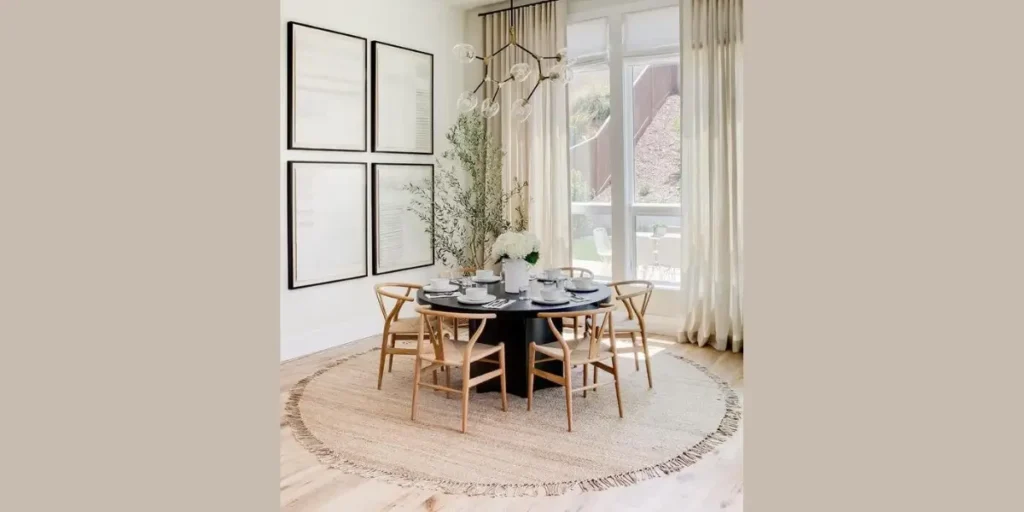
For round dining tables, I always recommend round rugs. Matching the rug shape to the table creates visual harmony and softens the overall layout.
Round rugs improve flow, especially in smaller dining rooms where sharp corners can feel restrictive. They naturally guide movement around the table.
I make sure the rug extends far enough to support chairs when pulled out. This keeps the setup functional while maintaining a cohesive and balanced look.
6. Natural Fiber Rugs for Organic Warmth
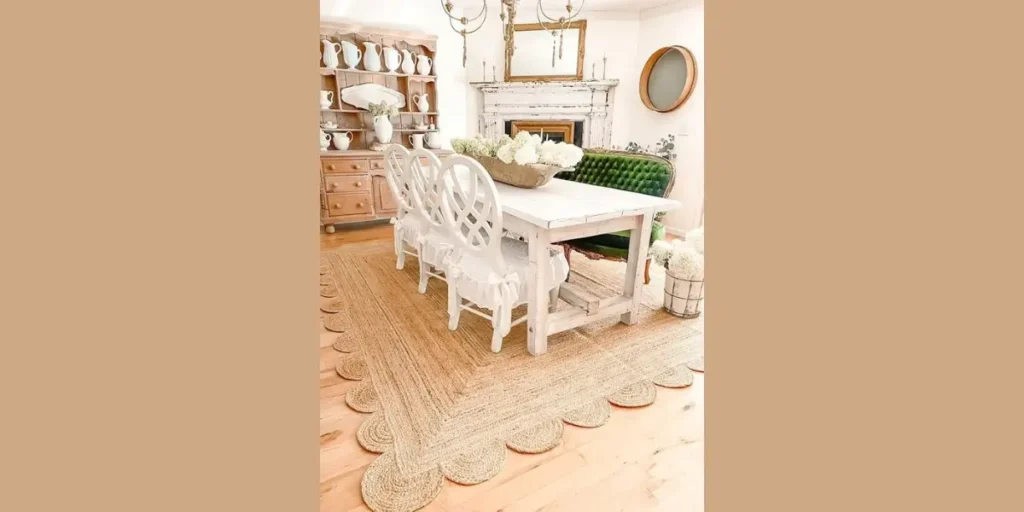
Natural fiber rugs like jute or sisal add texture and warmth to dining rooms. I often use them in relaxed, casual interiors where comfort matters more than formality.
These rugs bring an organic feel that pairs beautifully with wooden tables and neutral palettes. Their texture adds depth without relying on bold color.
I recommend sealed or tightly woven options for durability. When chosen carefully, natural fiber rugs create a grounded, welcoming dining atmosphere.
7. Washable Rugs for Family-Friendly Spaces
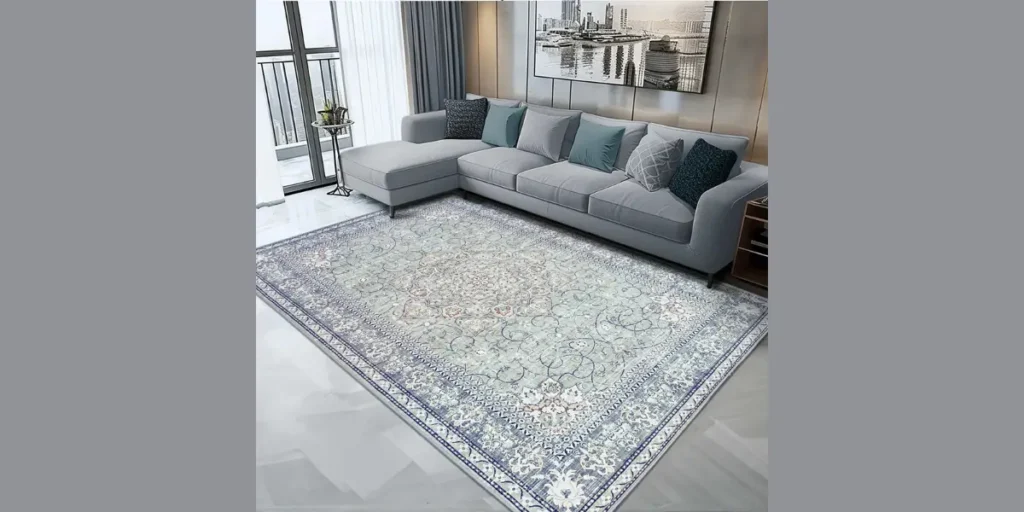
Washable rugs have completely changed how I approach dining room design. They remove the stress of spills and make maintenance incredibly easy.
I recommend them for families or homes where the dining table sees daily use. Modern washable rugs now come in stylish designs that don’t feel utilitarian.
Function meets style here. A washable rug allows you to enjoy the dining space fully without worrying about long-term damage or constant upkeep.
8. Dark Rugs for High-Traffic Dining Areas
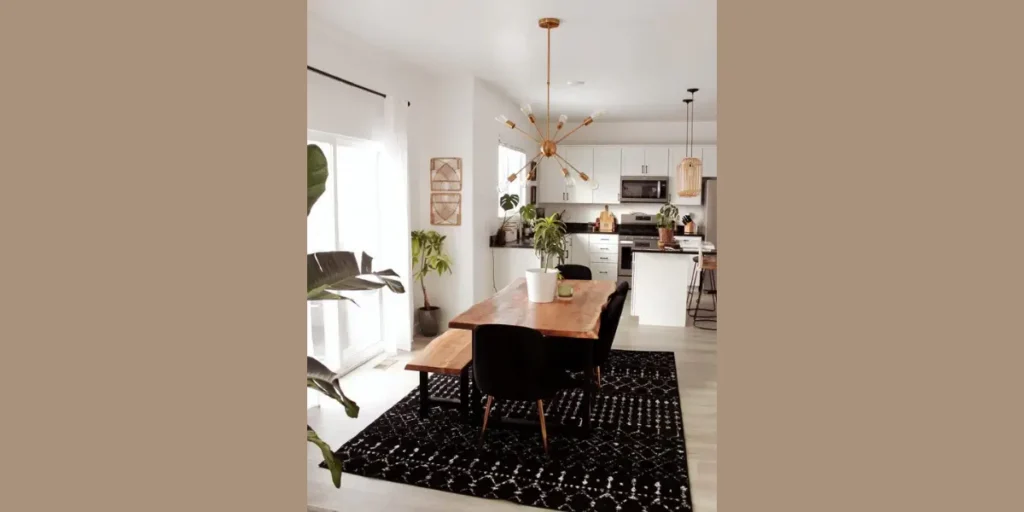
Dark-colored rugs work well in busy dining rooms. Shades like charcoal, navy, or deep brown help hide wear and everyday marks.
I often use dark rugs to ground light-colored furniture. This contrast adds depth and prevents the space from feeling washed out.
Dark rugs feel cozy and intentional. When balanced with proper lighting, they create a dining room that feels both practical and visually strong.
9. Vintage or Persian-Style Rugs
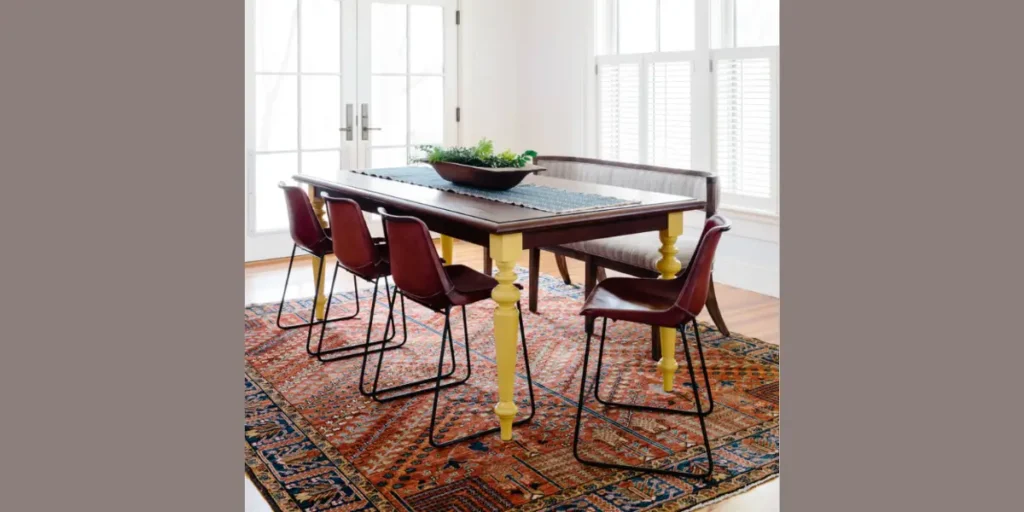
Vintage and Persian-style rugs bring instant character to a dining room. I use them when the goal is warmth and a collected, timeless feel.
Their layered patterns and rich colors make the space feel established rather than newly staged. They also work surprisingly well in modern interiors.
I size these rugs carefully to avoid crowding. When placed correctly, they elevate the dining room and add a sense of history and charm.
10. Minimalist Rugs for Modern Dining Rooms
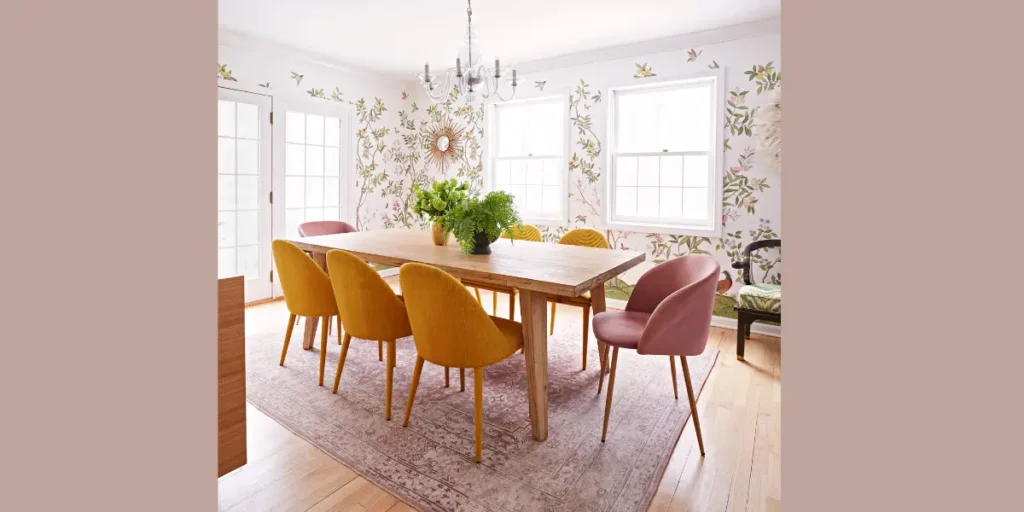
Minimalist rugs support clean, modern dining spaces without adding distraction. I choose subtle textures and muted tones for these interiors.
These rugs allow architectural elements, lighting, and furniture to take center stage. They enhance the room without demanding attention.
Minimalist rugs work best when quality is high. A well-made simple rug feels intentional and refined, completing the dining room with quiet confidence.
How to Choose the Right Rug Size and Material for a Dining Room
When I choose a dining room rug, I always start with size. The rug must extend beyond the table so chairs stay on the rug even when pulled out. This prevents awkward movement and keeps the dining area functional and comfortable.
Material is just as important as size. I look for rugs that can handle spills, foot traffic, and frequent chair movement. Flatweave, low-pile, or washable materials work best for everyday dining without sacrificing style.
Balancing durability with design ensures the rug enhances the space instead of becoming a maintenance problem. The right choice supports both comfort and long-term use.
FAQs
I recommend choosing a rug that extends at least 24 inches beyond all sides of the table. This allows chairs to remain on the rug when pulled out and keeps the dining area comfortable and visually balanced.
Yes, the rug should sit under both the table and chairs. This prevents chairs from catching on the edge of the rug and helps maintain a clean, cohesive look while improving functionality.
Absolutely. I suggest washable or low-pile rugs for family homes. These options make cleaning easier and reduce stress from spills while still adding warmth and style to the dining space.
Flatweave, synthetic blends, and washable rugs perform best in dining rooms. They handle wear well, clean easily, and allow smooth chair movement without damage.
Related Post
- 10 Best Farmhouse Dining Room
- 9 Famous Dining Room Accent Wall Ideas
- 10 Best Dining Room Interior Ideas
- Top 12 Dining Room Chair Ideas
- Top 11 Dining Room Lighting Over Table Ideas
Conclusion
A well-chosen dining room rug does far more than decorate the floor, it defines the space, improves comfort, and supports everyday use. From my experience, the best rugs balance size, material, and design so the dining area feels both practical and visually grounded.
When the rug allows smooth chair movement and complements the table and layout, the entire room feels intentional and complete.
Whether you prefer minimalist designs or bold patterns, investing in the right dining room rug enhances how the space looks and functions for years to come.