
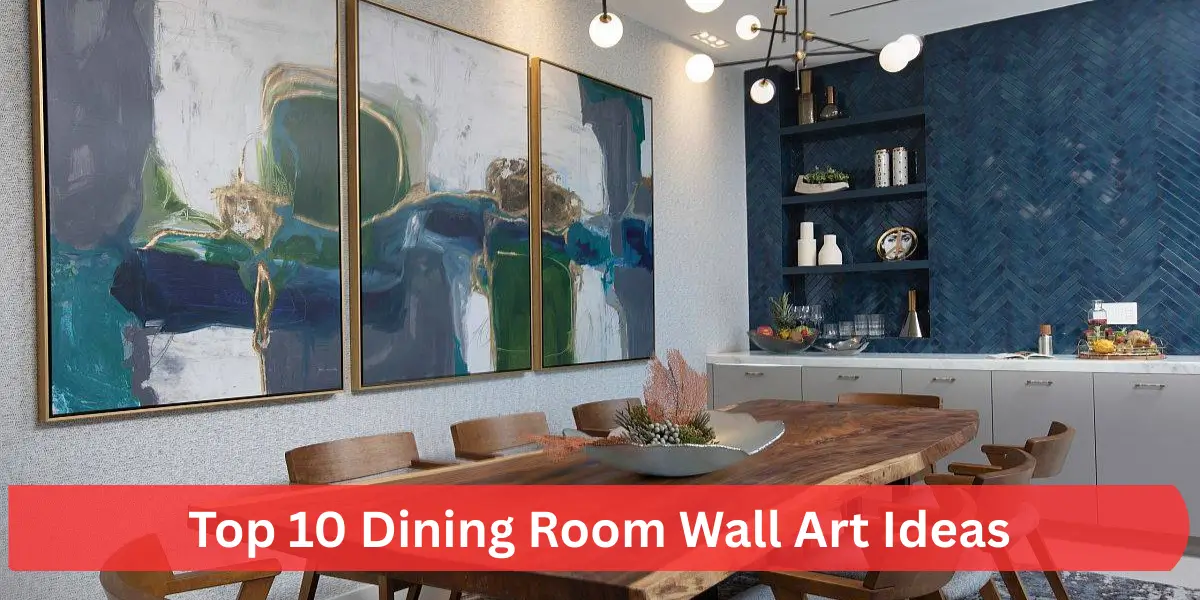
Dining room wall art is one of the most powerful tools I use to shape the mood and personality of a dining space. From my experience, the right wall décor doesn’t just fill empty walls it creates an atmosphere where people feel comfortable, connected, and inspired to linger longer at the table.
Whether the goal is elegance, warmth, or a modern edge, wall art plays a defining role in how the room is perceived.
In this guide, I’ll walk through thoughtfully selected dining room wall art ideas that balance aesthetics with function, helping you design a space that feels intentional, inviting, and visually memorable without overwhelming the room.
1. Statement Canvas Art as a Focal Point
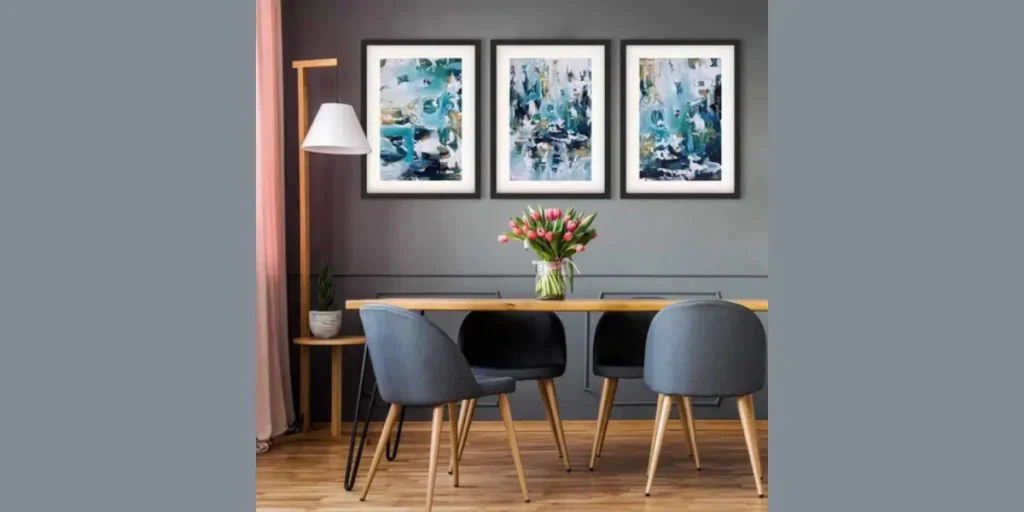
I often recommend statement canvas art when a dining room feels visually flat. A large canvas immediately anchors the wall and gives the space a clear focal point. Instead of scattering small décor items, I prefer one strong piece that draws attention without competing with furniture.
I choose artwork that reflects the room’s color palette but still adds contrast. Abstract designs, landscapes, or expressive brushwork work especially well because they spark conversation during meals. The scale matters more than the subject here.
When I hang statement art, I keep it at eye level and centered with the dining table. This placement creates balance and ensures the artwork feels intentional rather than decorative clutter.
2. Gallery Wall for a Layered Visual Story
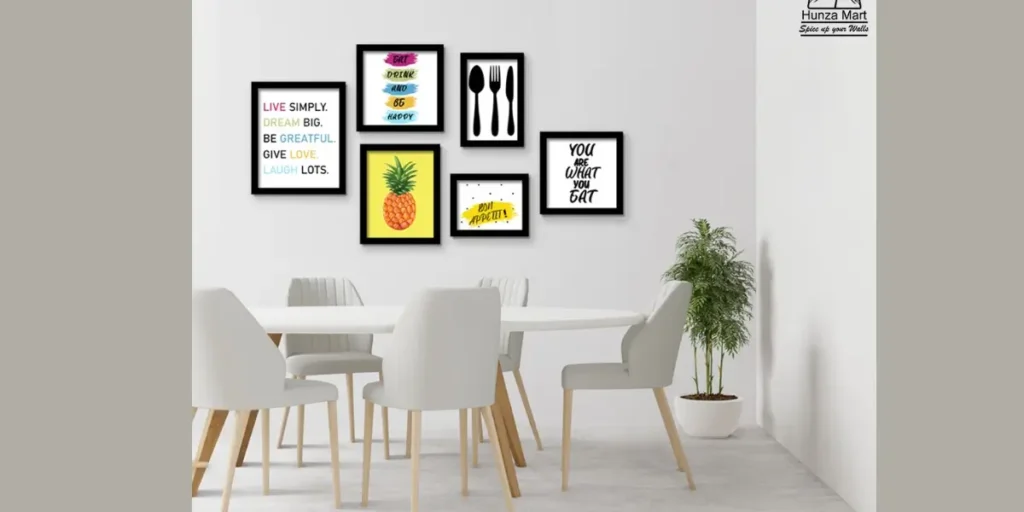
When I want a dining room to feel personal and curated, I design a gallery wall. This approach allows me to mix artwork, photography, and subtle illustrations while maintaining a cohesive theme. I treat the wall like a visual story rather than random decoration.
I usually stick to a limited color palette or consistent frame style to avoid chaos. Black, wood, or thin metallic frames help tie different pieces together without overpowering the wall. Spacing plays a critical role in keeping the layout clean.
Before hanging anything, I map the arrangement on the floor. This step helps me create rhythm and balance so the gallery wall enhances the dining experience instead of distracting from it.
3. Metal Wall Art for a Contemporary Edge
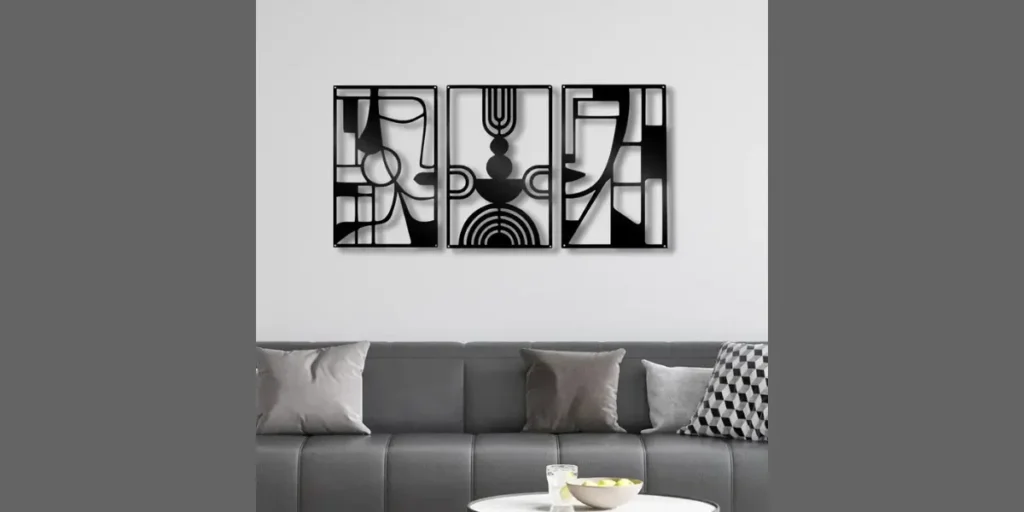
Metal wall art works beautifully when I want to introduce texture and structure into a dining room. Its clean lines and dimensional quality add depth without relying on color-heavy designs. I often use this style in modern or transitional interiors.
Geometric shapes, abstract forms, or nature-inspired metal designs create visual interest while staying refined. I choose finishes like matte black, brushed gold, or bronze depending on the room’s lighting and furniture materials.
I avoid overcrowding when working with metal art. One well-sized piece or a symmetrical pair usually delivers a stronger impact than multiple smaller elements competing for attention.
4. Mirror Wall Art to Expand the Space
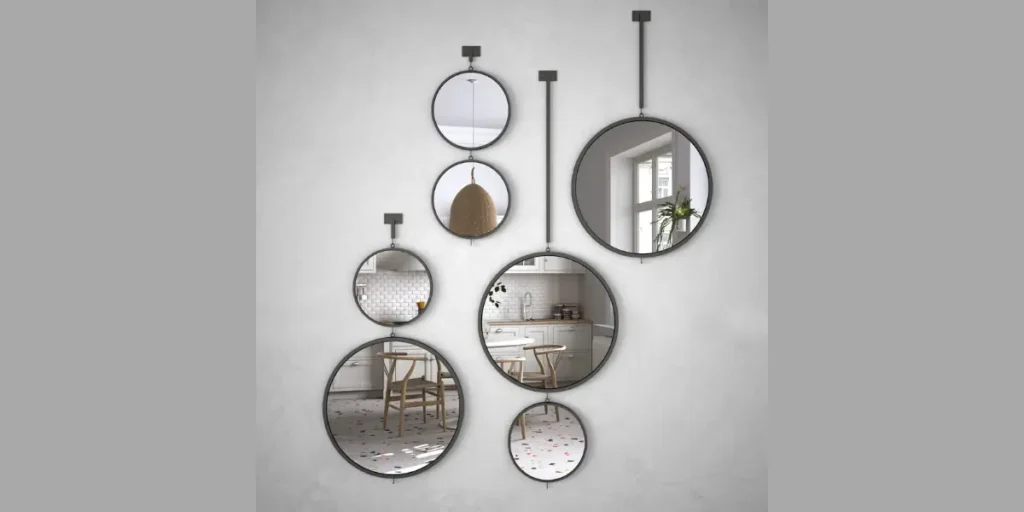
In smaller dining rooms, I rely on mirror wall art to visually open the space. Mirrors reflect light and instantly make the room feel brighter and more spacious. I treat mirrors as design elements, not just functional pieces.
I prefer round or softly arched mirrors because they break up sharp lines from tables and chairs. Decorative frames add character, while minimalist frames keep the look modern and airy.
Placement matters greatly. I position mirrors where they reflect light sources or architectural details, not clutter. This approach enhances depth and keeps the dining room feeling intentional and well-designed.
5. Floating Shelves with Curated Art Pieces
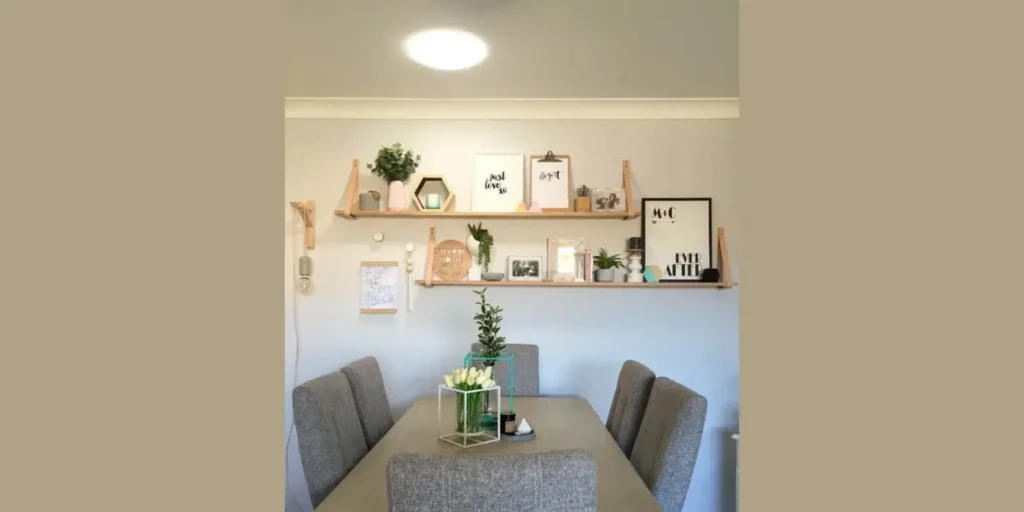
Floating shelves allow me to combine wall art with functionality. Instead of committing to fixed artwork, I style shelves with framed art, ceramics, plants, and subtle décor that can evolve over time.
I keep the styling minimal and intentional. Too many objects can overwhelm the dining area, so I focus on negative space as much as décor. Odd-number groupings often feel more natural and visually pleasing.
When choosing shelves, I match their finish with the dining table or flooring. This small detail helps the shelves blend seamlessly into the space while still adding visual interest to the wall.
6. Typography and Quote Art with Meaning
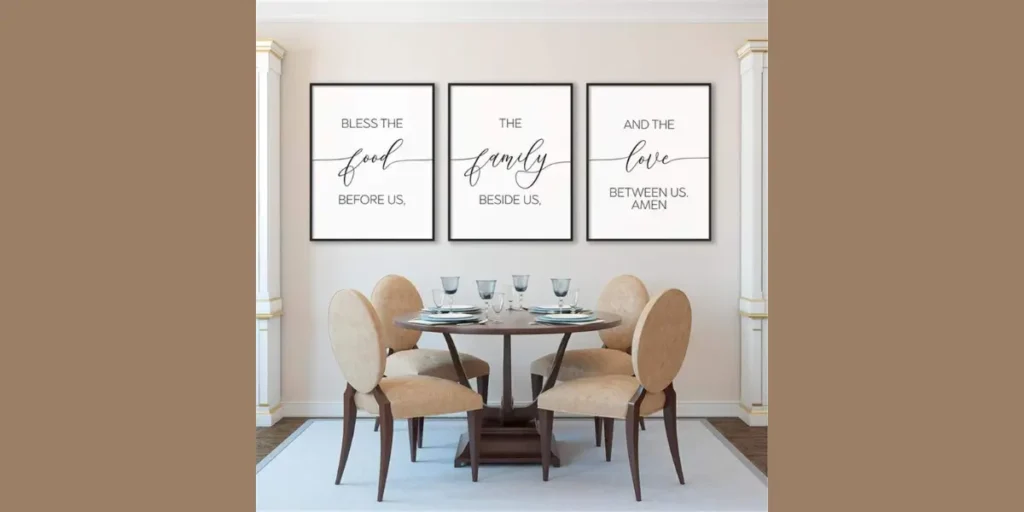
Typography wall art works best when it feels thoughtful rather than trendy. I select quotes that reflect gathering, food, or connection, keeping the message relevant to the dining experience.
I lean toward clean fonts and simple layouts to avoid visual noise. Black text on neutral backgrounds keeps the look timeless and ensures the quote doesn’t dominate the room. Scale plays a big role here.
I usually place typography art where it complements other décor instead of standing alone. This integration helps the text feel like part of the design rather than a decorative afterthought.
7. Decorative Wall Plates for Timeless Charm
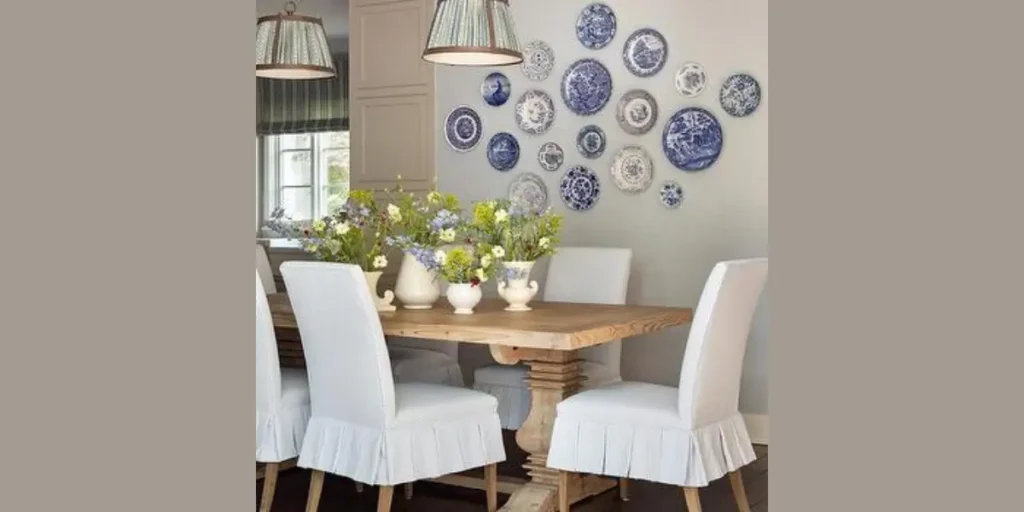
Wall plates bring character and tradition into dining spaces when styled correctly. I use them to add texture and pattern without relying on framed art. This approach works especially well in classic or eclectic interiors.
I choose plates with complementary colors or subtle patterns to maintain cohesion. Mixing sizes adds movement, while consistent spacing keeps the arrangement polished rather than busy.
Before installation, I test the layout on the floor. This step helps me refine the balance and ensures the wall plates feel curated instead of randomly placed.
8. Nature-Inspired Wall Art for a Calm Atmosphere
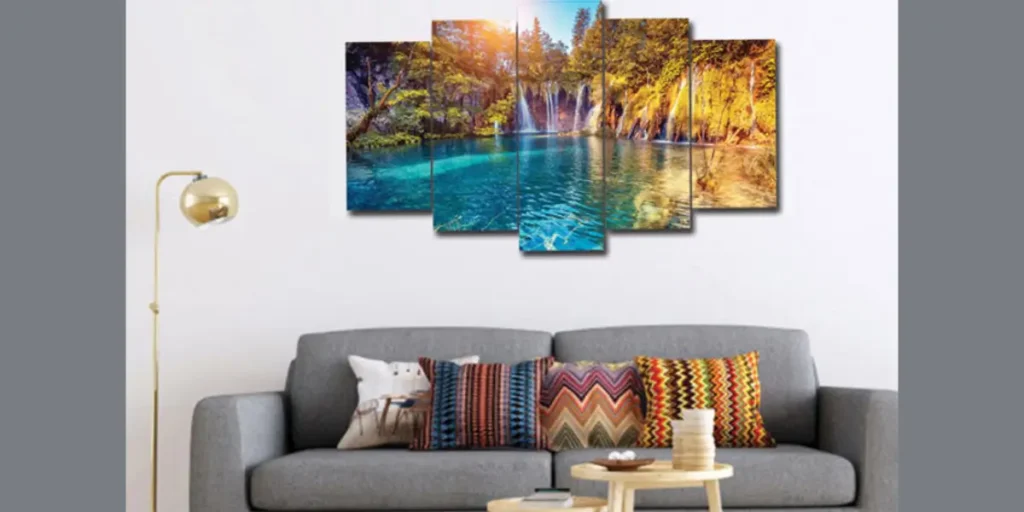
Nature-inspired wall art helps me create a relaxed and welcoming dining environment. Botanical prints, leaf motifs, or organic textures soften the space and introduce a sense of calm.
I often pair this art with natural materials like wood tables or linen upholstery. This connection reinforces the organic feel and makes the dining room more cohesive.
I avoid overly bright greens and lean toward muted, earthy tones. These shades feel timeless and prevent the artwork from overpowering the dining experience.
9. Wall Murals or Artistic Wallpaper Accents
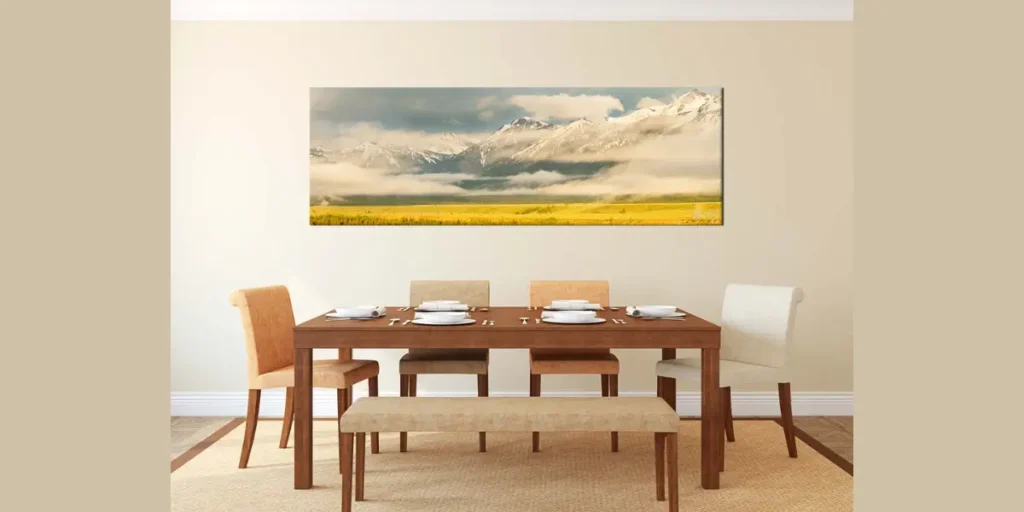
When I want a bold transformation, I turn to wall murals or artistic wallpaper. A single accent wall can redefine the entire dining room without adding physical décor elements.
I select designs that complement the room’s scale and lighting. Subtle textures work well in smaller spaces, while expressive patterns suit larger dining areas.
I keep surrounding walls minimal to let the mural breathe. This restraint ensures the design feels intentional and elevates the dining room instead of overwhelming it.
10. Decorative Wall Clocks as Functional Art
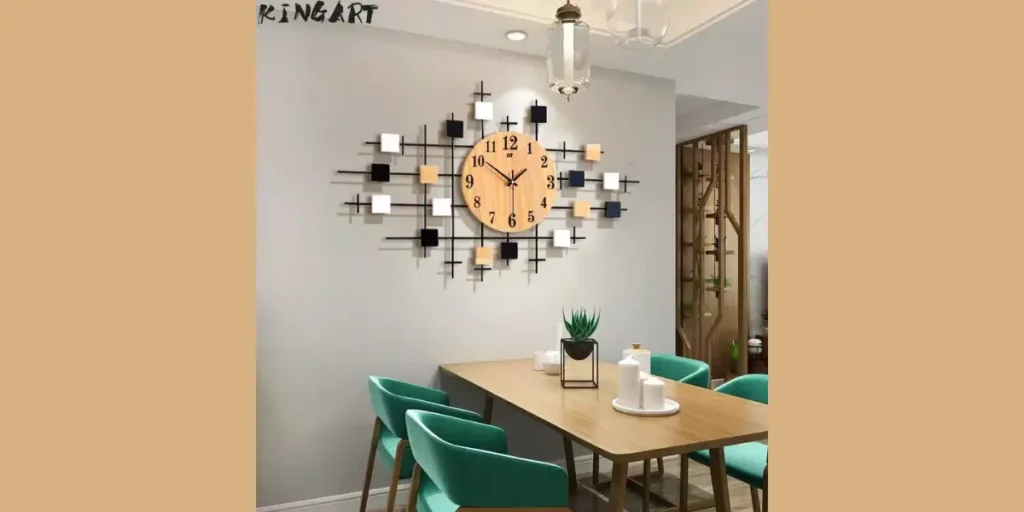
A decorative wall clock allows me to blend function with aesthetics. Instead of treating it as a utility item, I use it as a visual anchor on the dining wall.
I prefer oversized clocks with clean designs, as they read clearly from a distance and hold their own as décor. Materials like metal or wood help match existing furniture.
I position the clock where it balances the wall without competing with other art. This approach keeps the dining room organized, stylish, and purpose-driven.
How to Choose the Right Wall Art for Your Dining Room
When I choose wall art for a dining room, I always start with the size of the space. Large rooms can handle bold or oversized pieces, while smaller dining areas benefit from lighter visuals like mirrors or minimal artwork. Scale matters because wall art should enhance the room, not overpower it.
I also pay close attention to furniture, lighting, and color balance. Wall art should connect naturally with the dining table, chairs, and lighting fixtures. When everything feels visually aligned, the room looks intentional rather than decorated.
Most importantly, I avoid following trends blindly. I focus on pieces that feel timeless and reflect the personality of the space. This approach keeps the dining room stylish for years without constant updates.
FAQs
In my experience, wall art that creates a calm and welcoming atmosphere works best in dining spaces. Canvas art, gallery walls, and nature-inspired designs are excellent choices because they enhance the room without distracting from meals or conversation.
I usually hang wall art at eye level, which is about 57–60 inches from the floor to the center of the artwork. When placed above a dining table or sideboard, I leave enough space so the art feels connected but not crowded.
Yes, mixing styles can work beautifully when done intentionally. I stick to a consistent color palette or frame style to create harmony, even if the artwork itself varies in theme or texture.
Wallpaper works best when you want a strong visual statement with minimal accessories. Framed wall art offers more flexibility and is easier to update, so I choose based on how permanent I want the design to feel.
Related Post
- Top 15 Dining Room Wallpaper Ideas
- Top 10 Dining Room Chandelier Ideas
- 12 Best Dining Room Layout Ideas
- 9 Best Dining Room Furniture Ideas
- 11 Best Dining Room Lighting Ideas
- 10 Best Dining Room Wall Decor Ideas
Conclusion
Dining room wall art is more than a finishing touch, it’s a design decision that shapes how the space feels every time people gather around the table.
From my experience, the most successful dining rooms balance visual interest with comfort, allowing art to support the atmosphere rather than dominate it. Whether you choose bold statement pieces, subtle textures, or personal collections, the key is intentional placement and thoughtful selection.
When wall art aligns with the room’s scale, lighting, and purpose, the dining area becomes inviting, expressive, and memorable. A well-designed wall doesn’t just complete the room; it elevates the entire dining experience.